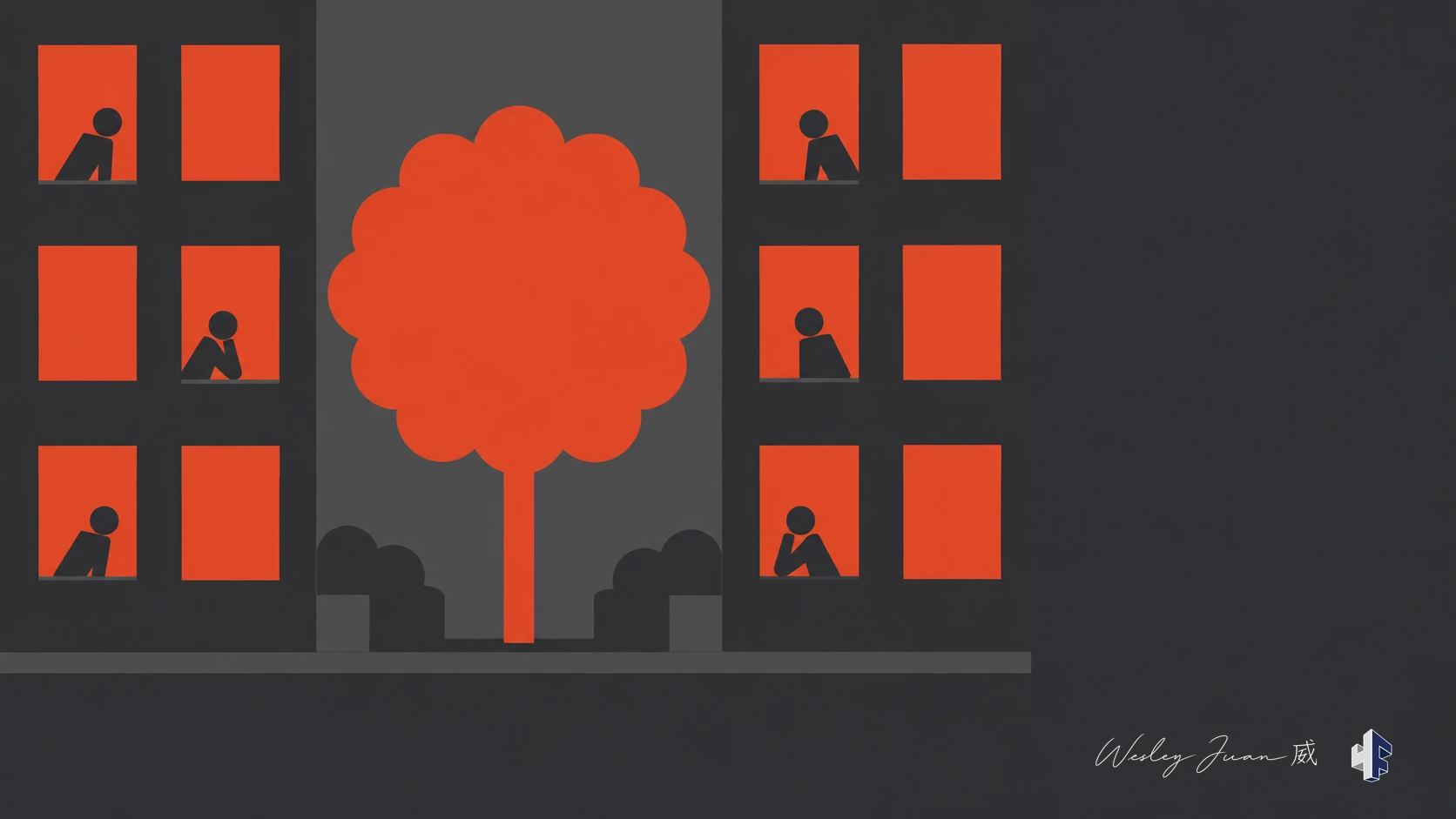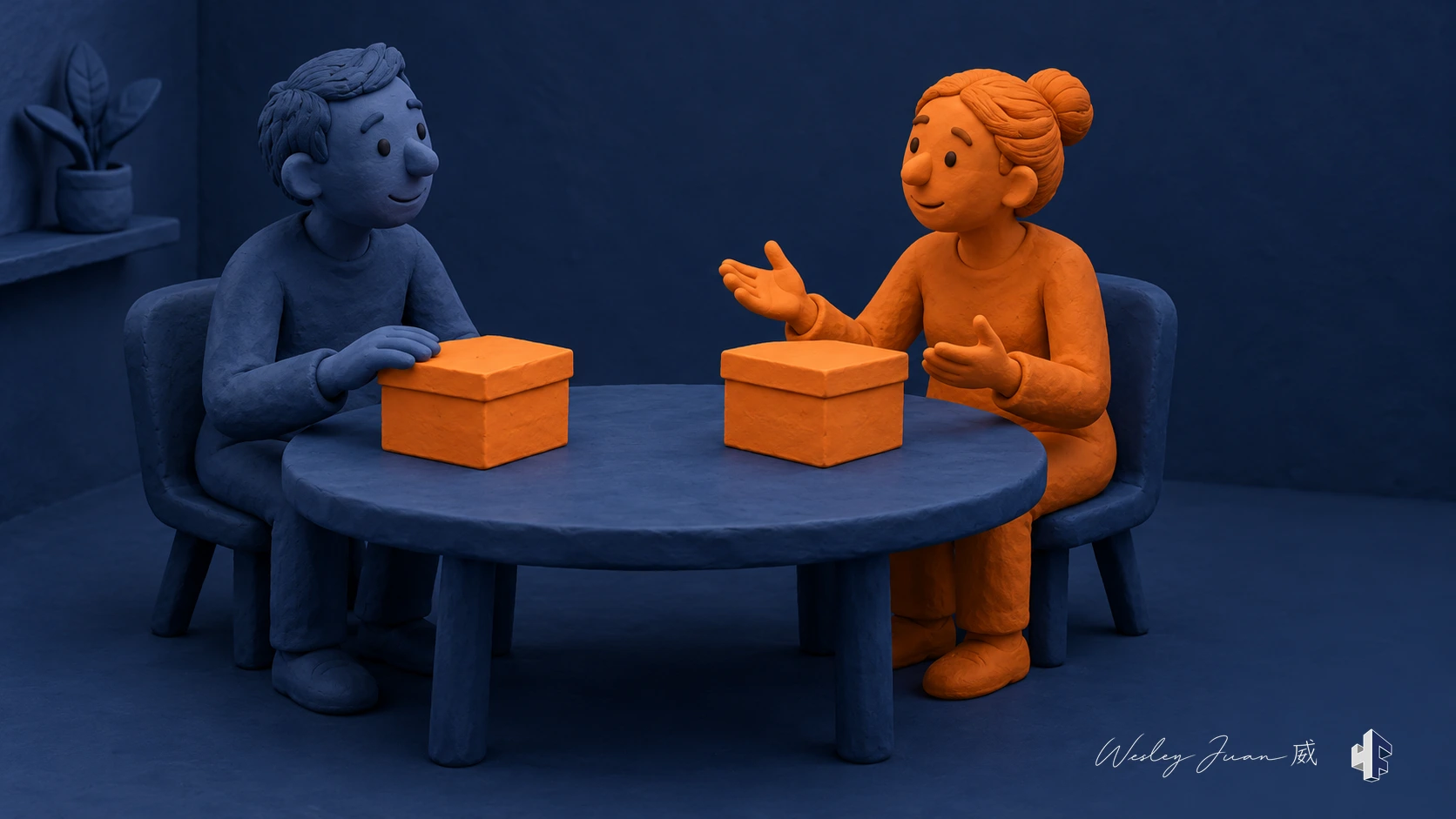
In section 293 of the Philosophical Investigations, Wittgenstein asks us to imagine this: everyone has a box, and inside it is something called a beetle. No one can look into anyone else’s box. Yet everyone says they know what a beetle is.
What the beetle hides for us
Each box might hold something different. It might even be empty. If “beetle” still has a use in the language we share, that use gets settled in how people use the word together. Wittgenstein is testing an idea here: are words for feelings just labels stuck onto private objects inside us?
The question is finer-grained than “You’ll never understand me.” It brings our attention back to how we learn a word, use it and answer it, instead of picturing something inside that no one else will ever see.
Unseen isn’t the same as unfelt
Read the box story as “other people’s pain doesn’t matter” and you’ve wandered off the path. Wittgenstein isn’t abolishing pain, and he isn’t asking us to accept only the reactions we can see from the outside.
In everyday life, we don’t need to prove our feelings match someone else’s before we start to care. When someone says they’re hurting, first listen to how they describe it. Ask when it started, and how they’d like us to respond. We can’t lay two feelings side by side on a table. That doesn’t empty any of these responses of meaning.
We can’t lay our feelings side by side. We can still answer each other more carefully.
Two people, both saying “freedom”
Picture two people looking at a piece of work together. One says, “This feels freer.” The other agrees right away. Only when they start talking about revisions does it come out: the first meant no fixed form; the second meant choosing your own deadline.
Rather than arguing over who understands freedom better, each can name one situation that fits and one that doesn’t, then see what each of them actually wants to keep. Same word, two different things in this conversation. If each can name one bit of leeway in the revisions they’d want to hold on to, the abstract agreement can take its next step.
But don’t turn every feeling into a cross-examination. When a friend says they’re tired, they usually just need rest, not a full definition of “tired” on the spot. Questions are there to open the door; after you ask, the other person should find it easier to talk.
Understanding can be something you keep revising
We often say “I get it” too fast, because we want to show we’re close. We say “You don’t get it” too fast, too, because we’ve been flattened before. Either line stalls whatever still needed to be said.
Try a reply with a little more room in it: “Here’s what I understand so far. Which part is different from what you meant?” You hand over your understanding and leave space for the other person to rewrite it.
The box stays closed.
But the other person says, “That last example was getting close.”
Two people both say they want “freedom.” One wants to decide what to do; the other wants to set their own hours. What still needs talking through before they really agree?
Your notes and saves (optional)
Keep a version of your own.
Saved only in this device’s browser and never sent anywhere. Other devices won’t see it, and clearing your browsing data erases it.
Further reading and sources
- Wittgenstein, Philosophical Investigations §293 ↗
The original text of the beetle-in-the-box thought experiment.
- Philosophical Investigations §§243–308 (selections) ↗
§304 and §307 give the context that keeps the argument from being misread as a denial of feelings.
- Stanford Encyclopedia of Philosophy: Private Language ↗
The private language problem and its competing interpretations. I added the everyday practice.