Arendt meant The Life of the Mind to close with a third part, on judging, after its volumes on thinking and willing. She died in 1975 before she could write it. What she left in other books and lecture notes never added up to a tidy method. It kept asking one thing, though: how do you bring other people’s standpoints into your own judgment?
Other people aren’t just other versions of me
Arendt put plurality at the center of political life: the people who live together are different people. We can talk about the same thing together, yet each of us sees it from a different spot.
She borrowed Kant’s “enlarged mentality” to think about how to take other people’s views into a judgment while still standing on your own. It isn’t a tally of which line most people agree with. Nor is it coming up with an answer that ends the argument for good.
Bring the question into daily life, and the first thing that surfaces is: who hasn’t had a chance to speak yet?
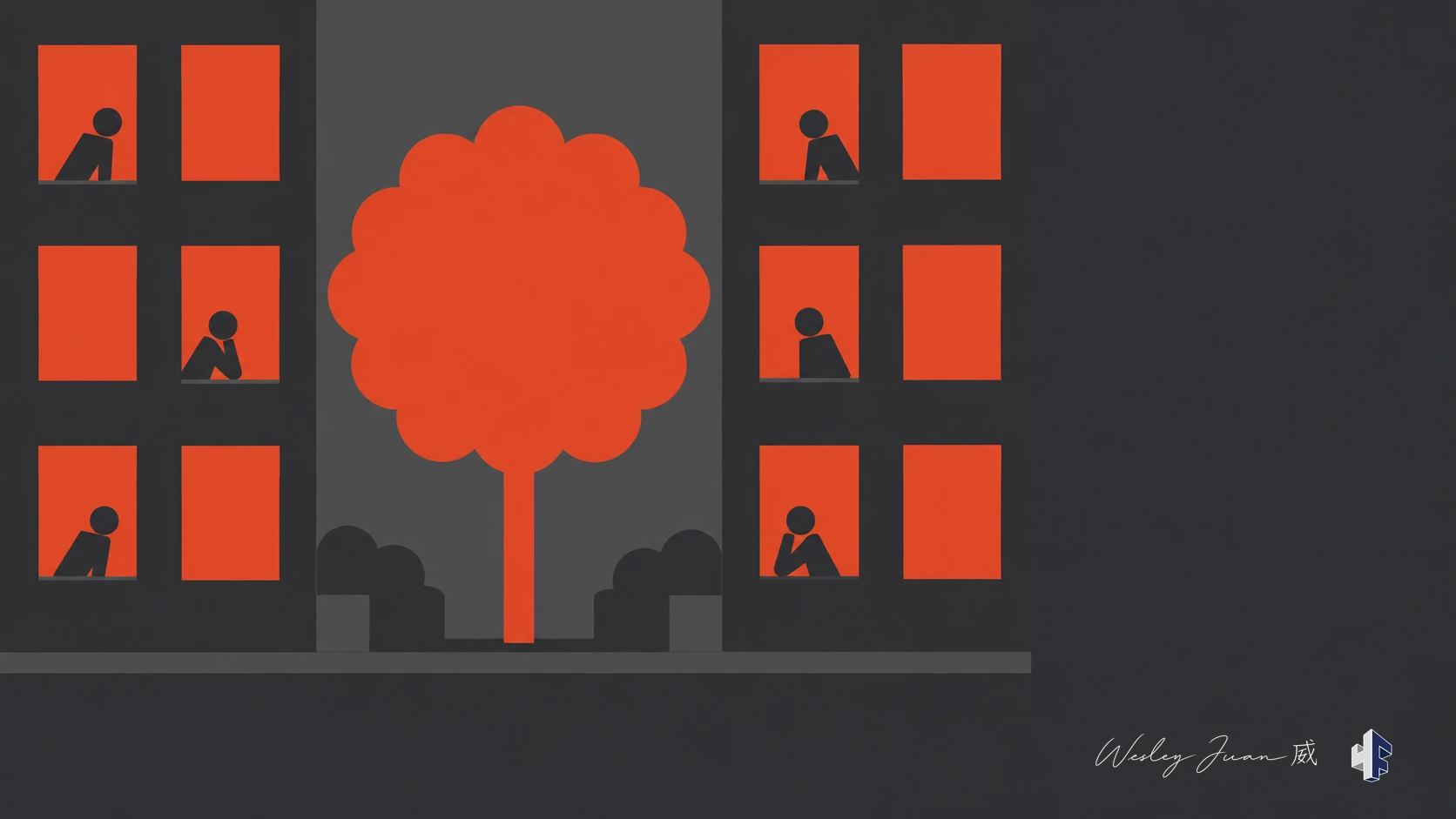
Another window shows inconvenient things, too
Picture an apartment complex planning to turn its common lounge into a reading room. People who are home during the day love the quiet. People who only get back at night lose the one place they used to chat with their neighbors.
If the meeting only asks “Do you like reading?”, it can easily miss the split underneath. Some care about noise. Some care about getting together. Some worry new rules will make the shared space harder for them to use.
Bringing these standpoints in doesn’t make the decision easier. It may even make a neat plan messier. But the mess isn’t extra. It was always there. It just hadn’t taken a seat at the meeting yet.
Bring other people’s standpoints into your judgment, and keep the final reasons in your own hands.
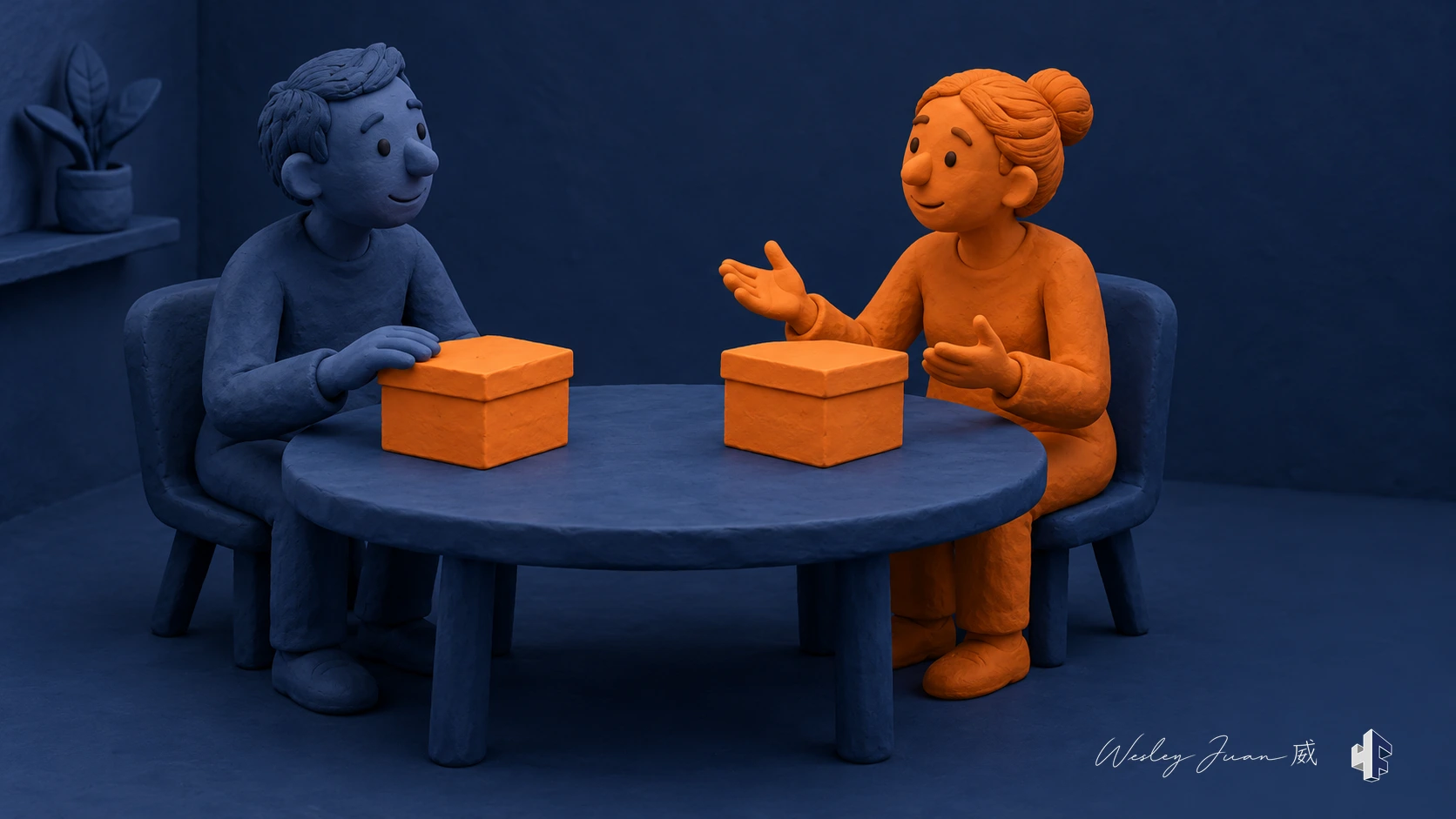
Who is the empty chair for?
When you discuss a proposal, start by listing the people it affects who haven’t spoken yet. Ask questions from where they stand, then mark which ones are only your guesses and which need the person to confirm.
Imagining someone else’s position helps you find blind spots. After that, you still have to go and actually listen. Whoever speaks up for the late-night crowd still can’t say for sure whether what they need is a place to talk, somewhere to leave their things, or a spot to wait a few minutes for family.
Then come back to your own judgment. Having heard these needs, what are you willing to adjust, what are you keeping, and why? What a sparring session trains is reasons that hold up when questioned from different seats, not a convincing bit of role-play.
Plurality doesn’t mean every claim is equally sound
Weighing the same data differently is one thing. Getting a checkable fact wrong is another. If there’s a record of how late the lounge actually stays open, look it up first. Don’t let wrong information sit forever beside confirmed arrangements just to seem open-minded.
In the end, someone will be unhappy with the decision. When that moment comes, you can lay out which needs you weighed, why you made the trade-off you did, and when you’ll revisit it, and admit that the differences are still there after all the talking.
One world has many windows. Walking over to someone else’s doesn’t ask you to give up your own eyes. It reminds you that once you’re back in your seat, you can no longer so easily call your corner of the view the whole thing.
Turn the lounge into a quiet reading room, and some people gain a space while others lose their place to talk. How would you bring both ways of living into the decision?
Your notes and saves (optional)
Keep a version of your own.
Saved only in this device’s browser and never sent anywhere. Other devices won’t see it, and clearing your browsing data erases it.
Further reading and sources
- Stanford Encyclopedia of Philosophy: Hannah Arendt ↗
See the sections on action and plurality, on judgment and enlarged mentality, and on opinion and fact. I added the everyday scenario.