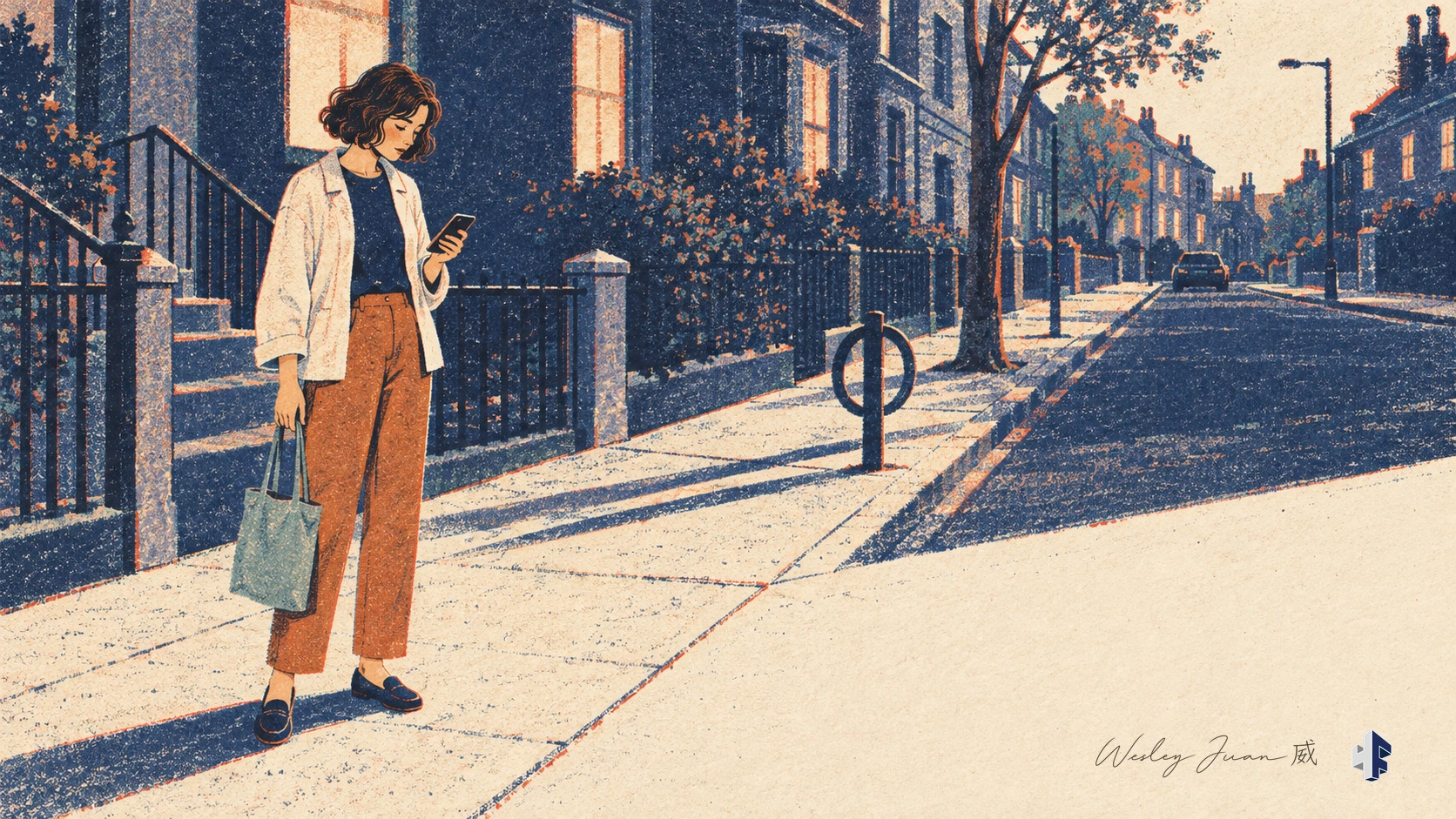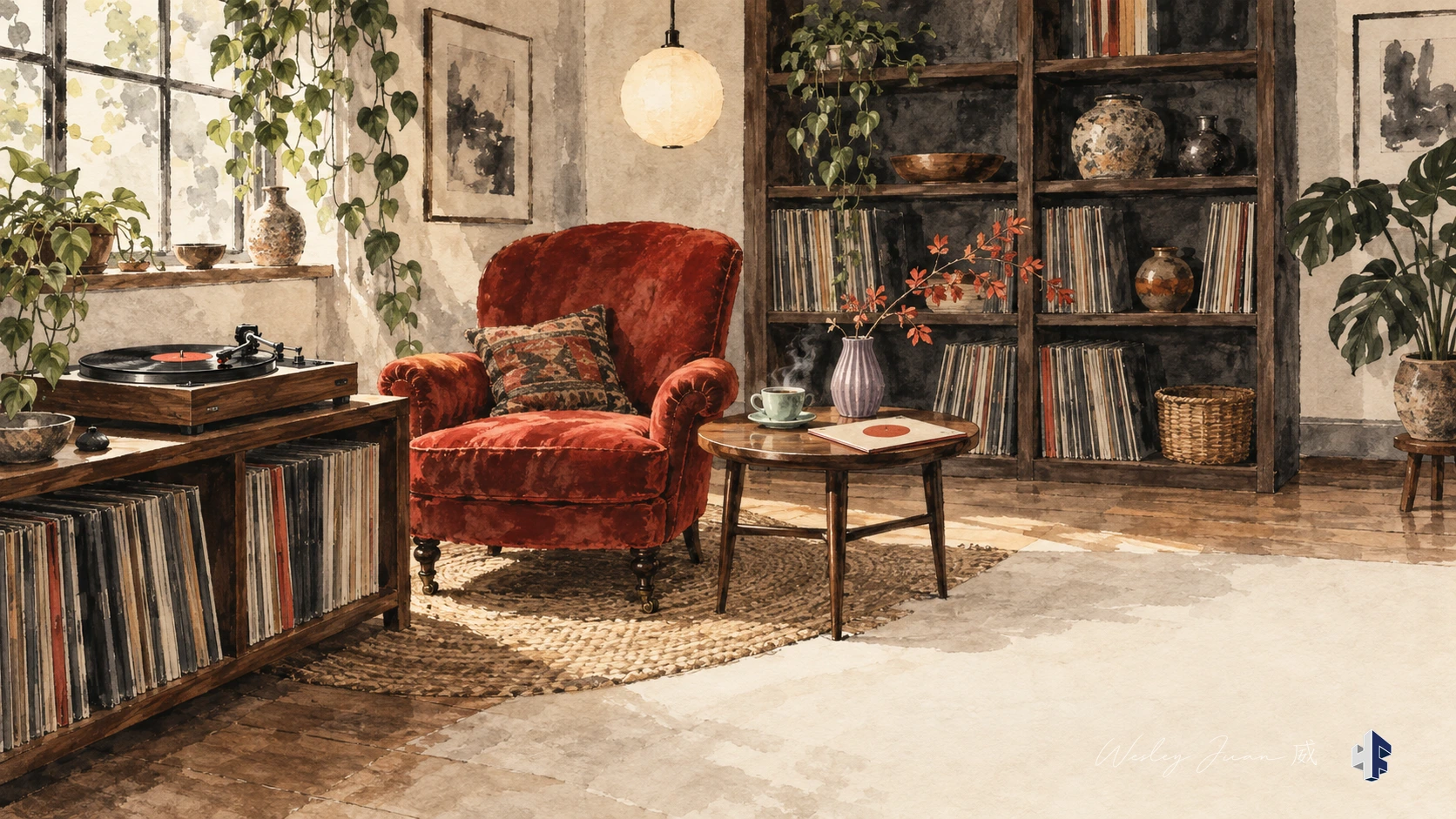
Some rooms are nearly empty and still make you fidget. Others are packed with records, old furniture and little objects of no obvious use, and the moment you walk in, you know they all belong to the same person.
Less isn’t the only kind of order
If someone asked you to describe a “pure” space, you might picture white walls, one table, a lamp with nothing extra. That works, of course. But now think of an old record shop you love: sleeves stacked on sleeves, posters all over the walls, speakers that refuse to hide. A lot of stuff, and a very clear character.
Which leaves a question worth playing with: does the cleanness we feel come from how many things there are, or from how they relate to each other? Make the first the only standard, and it’s easy to tidy every style into the same look.
Let every object know why it’s here
Imagine you’re setting up your own studio. You love a metal desk and a paper lamp, and you can’t bear to part with the wooden chair from your old home. They don’t need to come from the same decade, let alone the same brand. Try saying it out loud: put together, what do you want people to feel?
Maybe it’s a quiet you can linger in late at night. Maybe it’s the easygoing feel of a place where someone might put on a record at any moment. As that feeling comes into focus, your choices have something to stand on. The metal desk might stay; the harsh light goes first. You’re working on relationships now, rather than cutting things down to some number.
Some things stay because, without them, the whole room changes.
Consistency needs room to breathe
But relationships that are too tight can wear you out, too. A room where every color matches and every corner fits the theme can feel like a photo nobody is allowed to edit. Even putting down a half-finished glass of water feels like you’ve ruined something.
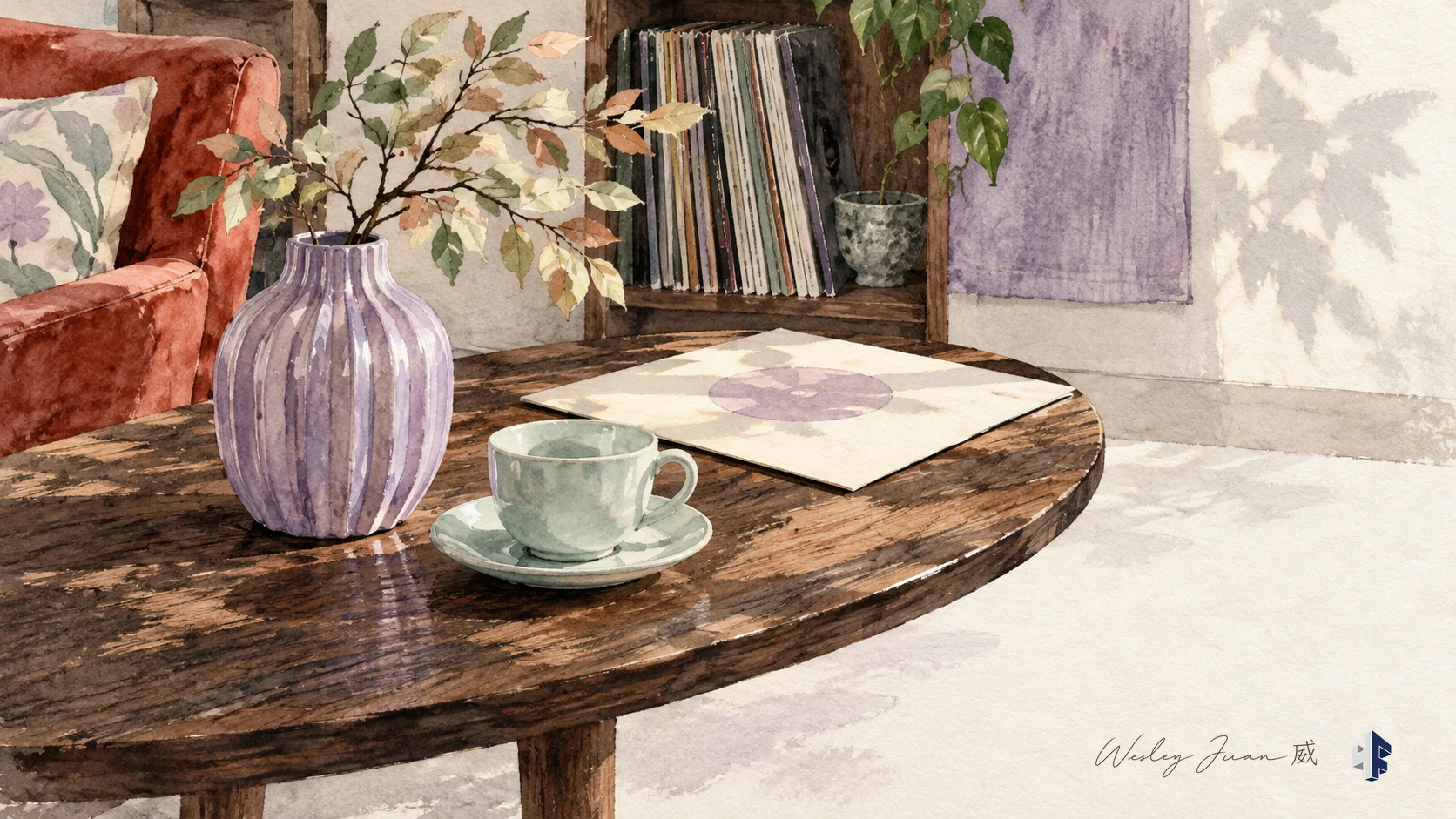
One odd little thing can bring a space back to life. That glass matches nothing, and it’s left a ring of water behind.
You look at it for a while. You don’t wipe it up right away.
Take the question into your work
A piece of writing has its own room, too. Jokes, examples, quotes, long sentences and short ones all take up space in it. Cut a sentence, and the piece may get clearer. Or you may have cut the only part with a pulse.
Next time you revise, set aside “Can this be tighter?” for a moment and ask “How does this part relate to the rest?” Some sentences carry information, some change the rhythm, some make the reader willing to pause. And sometimes you can’t quite say why you can’t let one go.
You may still end up cutting a lot. That slightly out-of-place joke, though, stays.
An old record shop is crammed full, and still it feels comfortable. What decides “just right” for you?
Your notes and saves (optional)
Keep a version of your own.
Saved only in this device’s browser and never sent anywhere. Other devices won’t see it, and clearing your browsing data erases it.