The temple on the hill in Athens still had a roof back then.
These days that takes some explaining.
We’re so used to the Parthenon as it looks now: a row of columns, another row of columns, sky in between. The sunset shines right through. Makes a great photo.
But ask the original architect, and his first question would probably be: where’s the roof?
There used to be a roof.
It was a very durable building, too. First it was Athena’s, then it served as a church, then as a mosque. It changed owners several times and people prayed to different gods inside, but they all got good use out of the same roof.
In September 1687, the Ottoman garrison found it one more use.
Powder magazine.
Someone carried the gunpowder in.
Through the colonnade, over the threshold, set it down, go back for the next load.
This load needed to be set down carefully.
Down below, the Venetians were setting up their guns.
If both sides had stopped right there, the temple could have stayed standing. One side had thick walls to store things in; the other had cannons for a siege.
But the guns were pointed up the hill.
On September 26, a shell fell into the temple and set off the powder inside.
The roof blew off, the central walls burst apart, the columns on both sides came down, and the sculptures they had been holding up fell with them.
There were people inside, too.
Smoke and dust hid the hilltop. Rubble was still coming down.
A building that had stood for more than two thousand years now had a huge hole blown through its middle.
Later, the Ottoman garrison surrendered. The Venetians walked onto the Acropolis and saw fallen columns, shattered walls and, up high, sculptures that hadn’t come down yet.
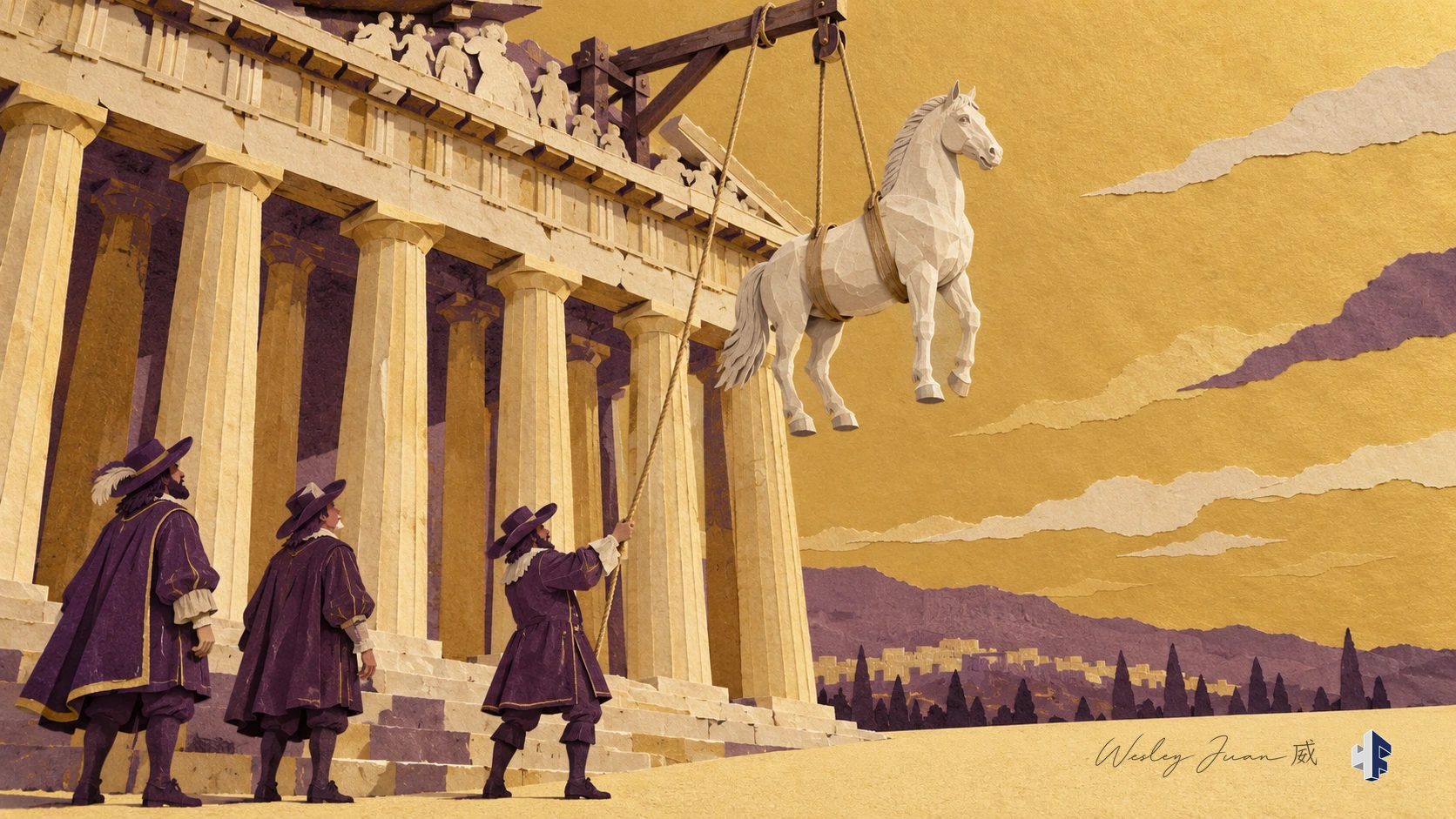
On the west pediment, the horses of Athena’s chariot were still there.
They had survived the explosion.
If nobody had noticed them after that, they might have stayed a while longer.
Morosini, the Venetian commander, noticed.
Those were very fine horses.
Take them home.
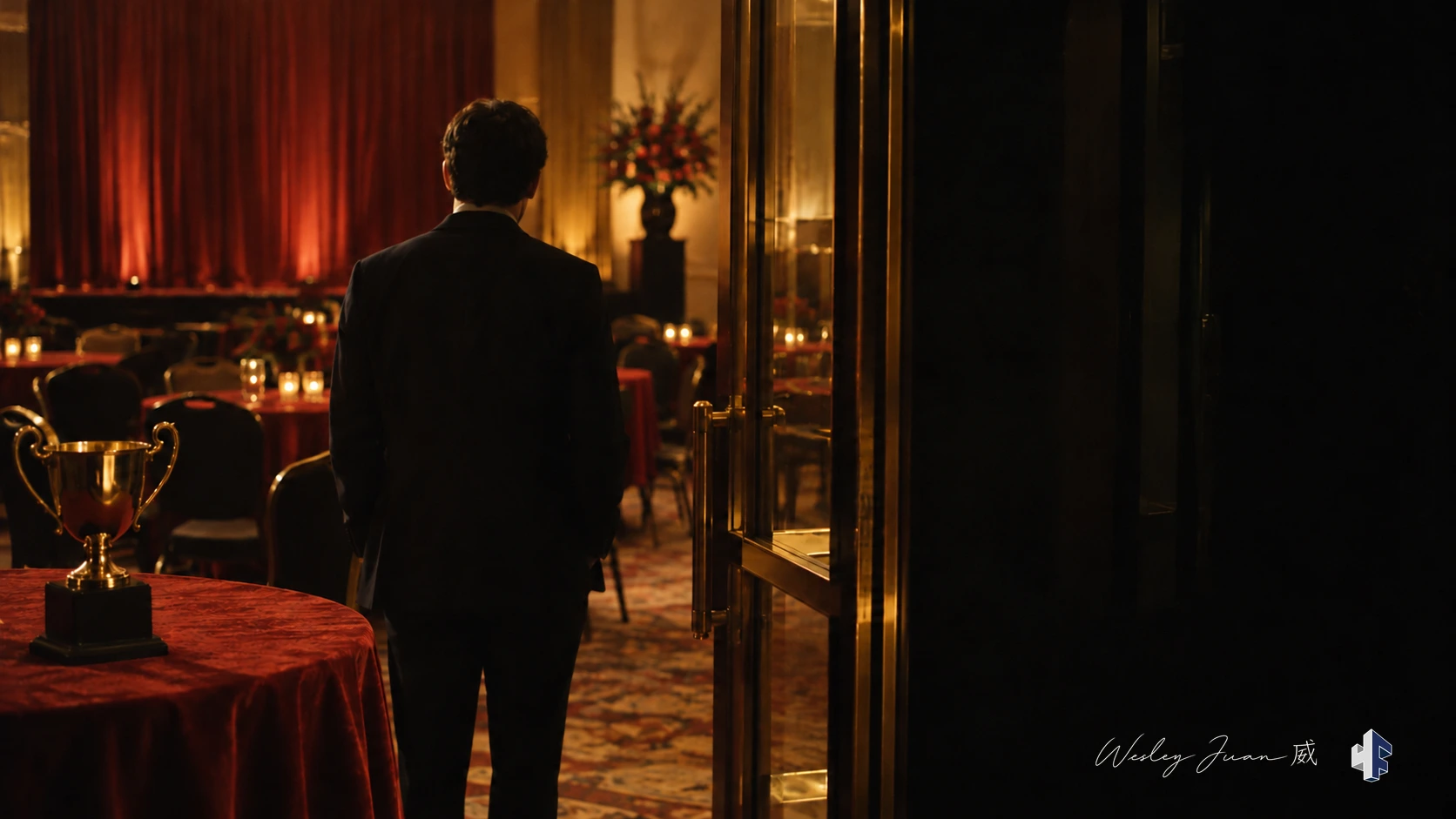
After a victory, you need something to show the people who didn’t come. Writing “We took Athens” in a letter has one effect. Putting the statues of Athens in Venice has quite another.
This trophy was a little hard to collect, though.
The horses were high up.
And made of marble.
You couldn’t ask them to come down on their own.
So men climbed up with tools and ropes. Tie them first, then pry them loose, then lower them slowly. Only on the ground could they be hauled off and loaded onto a ship.
Every step sounded perfectly reasonable.
The men below craned their necks.
The ropes pulled taut.
Those horses had been up there for more than two thousand years. They had watched temple turn into church, church turn into mosque, and had just come through a powder-magazine explosion.
Now they left the place where they had always been.
This time, nobody fired on the temple.
The rope snapped.
The marble hit the ground and the pieces flew. The men below stepped back and threw up their hands to shield their faces.
When the dust settled, the horses were no longer in a shape convenient for shipping.
If anyone really was in charge of counting the spoils, that line would have been hard to fill in.
“General, where are the horses?”
All he had to do was look down.
But he could no longer point to any one piece and say: that one’s a horse.
Wesley murmur
Reading this, I came away a little afraid of one sentence: “Oh, hey, we could use this.”
Temple, church, mosque. People changed who they prayed to, and the building was fine. Two thousand years without trouble, and then somebody decided the walls were thick enough for gunpowder.
It blew up.
Then the winners walked in and thought of another use: these horses would look great on display back home.
They shattered.
Being useful is what’s dangerous. Especially when someone decides you’re useful to them.
If they’d been a bit uglier, would the general have left them alone? They survived the shelling, only to be done in by “I’ll take those.”
A little over a hundred years later, another man showed up.
With better rope.
Your notes and saves (optional)
Keep a version of your own.
Saved only in this device’s browser and never sent anywhere. Other devices won’t see it, and clearing your browsing data erases it.
Further reading and sources
- Parthenon Frieze repository: the temple’s uses and the history of its destruction ↗
- Hellenic Parliament, Strolling Through the Athens of Travelers: the 1687 explosion and Morosini’s removal of the sculptures ↗
- Acropolis Museum: fragments of the west pediment horses ↗
- Acropolis Museum: Elgin’s removal of the sculptures in the early nineteenth century ↗