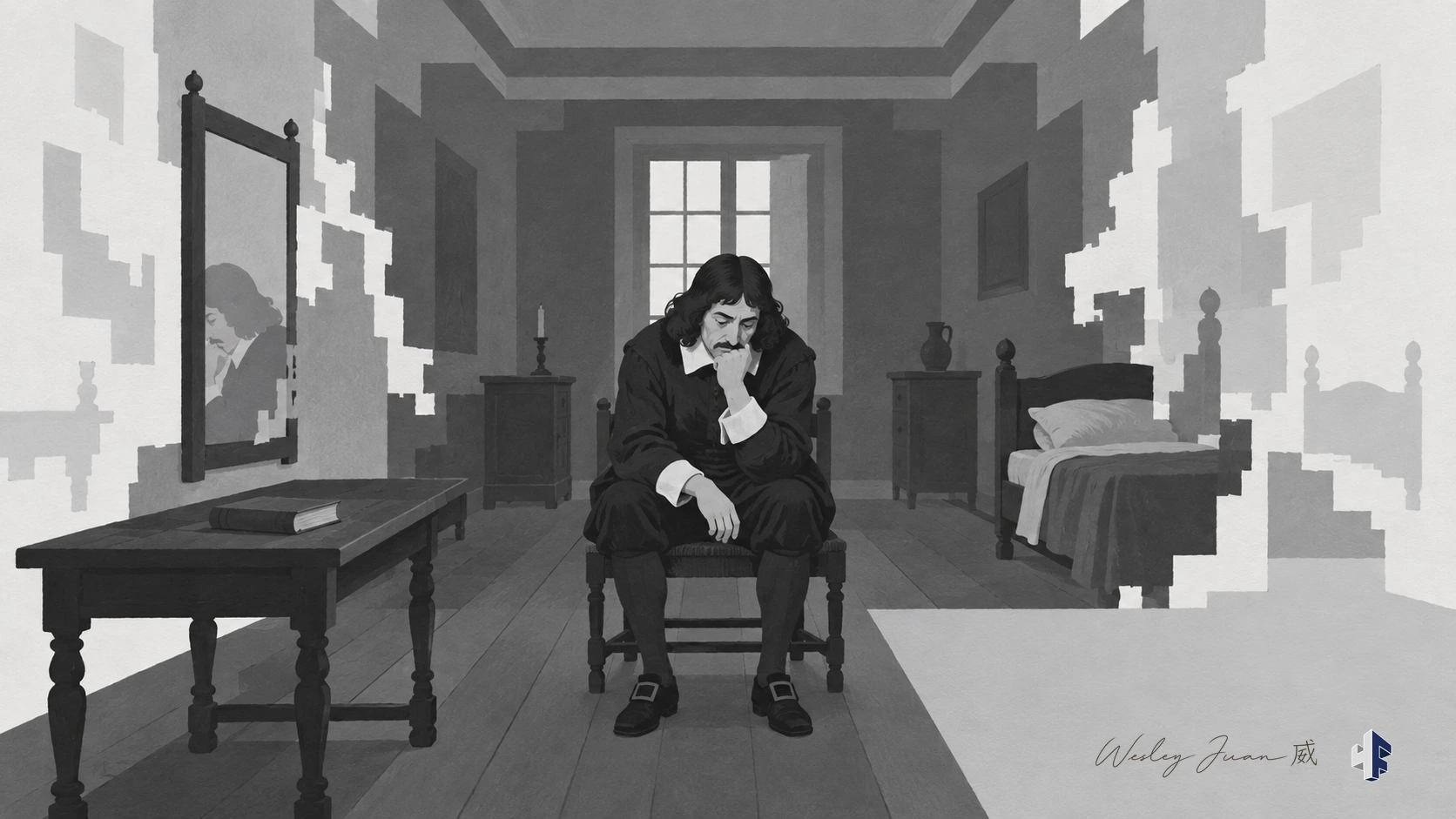
A friend sends you a song he made. You listen and tell him it’s lovely. He’s staring at the play count, convinced it flopped. You seem to be talking about the same piece of work, but you’re each holding a different report card.
Give “good” somewhere to land
A song’s melody, recording, stage presence and reach can each be talked about separately. Liking one part doesn’t mean you have to vouch for the rest, and one disappointing number doesn’t automatically erase everything that went right.
Picture a songwriter who has, for the first time, turned a rhythm that kept looping in his head into a finished track. If the goal was a sound experiment, this one already paid off. If he was also hoping it would sell tickets, there’s a separate problem to work on.
Separating the goals makes praise more precise, and keeps disappointment from ballooning into “I’m just not cut out for this.” You can still feel the work fell short. You just have a better idea of where your expectations were pinned.
Never heard, or heard and not liked
If a song has very few plays, the total alone can’t tell you where the problem is. It could be a few things: only a handful of people saw the link, people clicked and left quickly, or it was shared in the wrong setting.
Each one calls for different follow-up questions. If nobody saw it, reworking the chorus over and over won’t fix the way in. If listeners came in and found something other than what was promised, you need to check both the work and the expectations.
Be careful, too: a small amount of feedback is easily blown up by chance. Whether a few friends like it or not, that tells you about those few friends; strangers haven’t spoken yet. Make the next round of sharing more specific: ask where people stopped, and why.
Know what you’re trying to do, and you’ll know which report card to read.
Finding listeners isn’t sanding it down
Once creators start caring about reach, they often worry they’ve betrayed their own taste. But helping the right people find the work and making the work suit everyone’s taste are two different jobs.
A piece that needs quiet attention, for example, can come with an introduction that tells people how to listen, and be placed somewhere listeners have time. That won’t guarantee it’s a hit. It just gives it clearer conditions for being understood.
Of course, if you need the income right now, the choices get harder. Keeping the experimental work, taking different commissions on the side, or scaling back what you put in can all be part of the plan. No single choice protects time, freedom and income at once for every creator.

Next time you give feedback, add one more sentence
Instead of just saying “This one’s great,” point to the part you remembered, where your attention drifted, or when you’d want to hear it again. That feedback is still just your experience. It doesn’t need to pose as everyone’s answer.
If you’re the one who made it, start by saying what kind of response you want this time: whether the sound is clear, whether a section drags, or whether the intro set people up to expect a different kind of song. You’re more likely to get something you can use.
Your friend is still staring at the play count. You drag the progress bar back to that part.
“This bit. I want to hear it again.”
You love a song, but its play count is tiny. Beyond “It sounds great,” how would you respond so the person who made it has something to keep talking about?
Your notes and saves (optional)
Keep a version of your own.
Saved only in this device’s browser and never sent anywhere. Other devices won’t see it, and clearing your browsing data erases it.