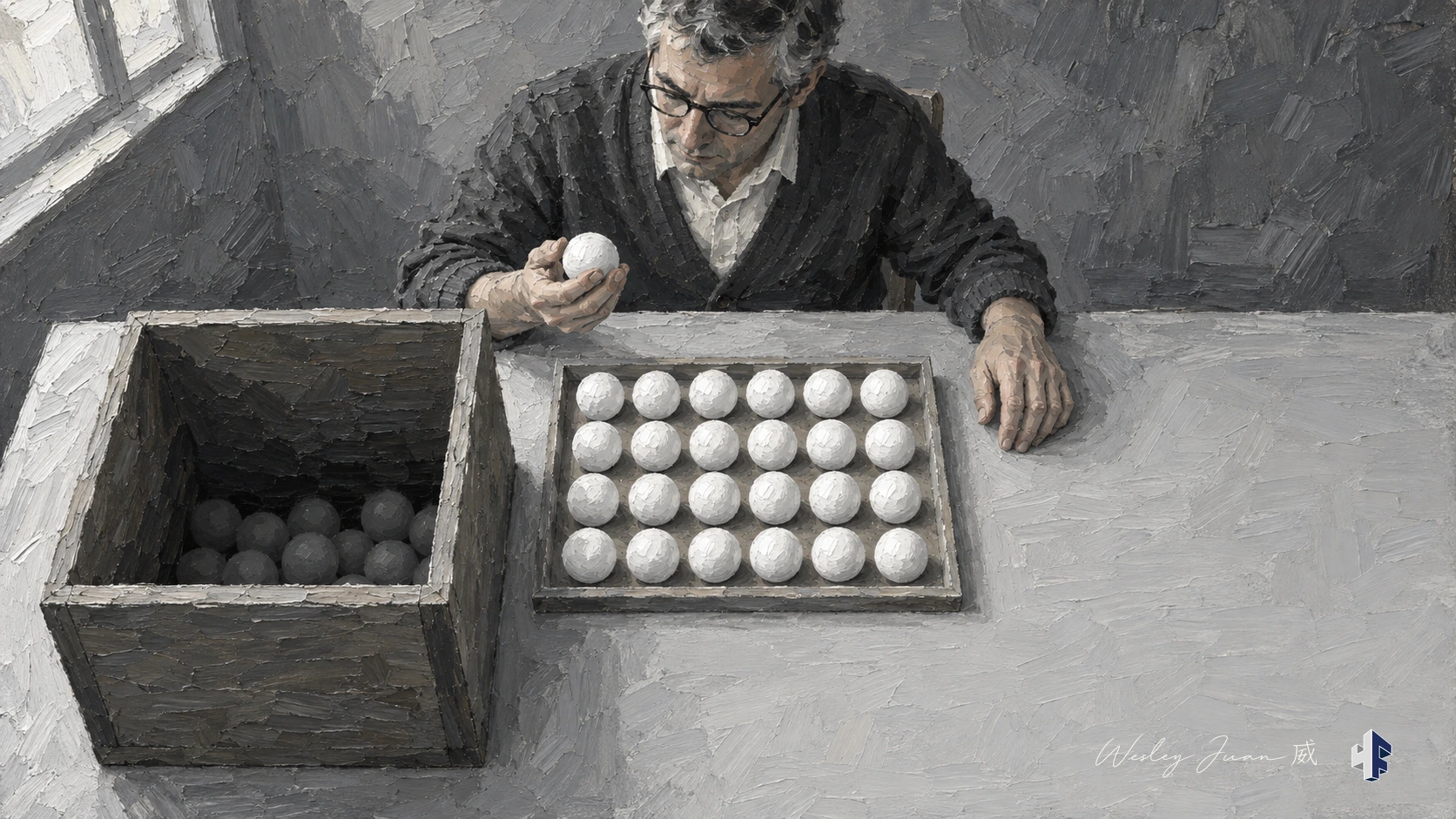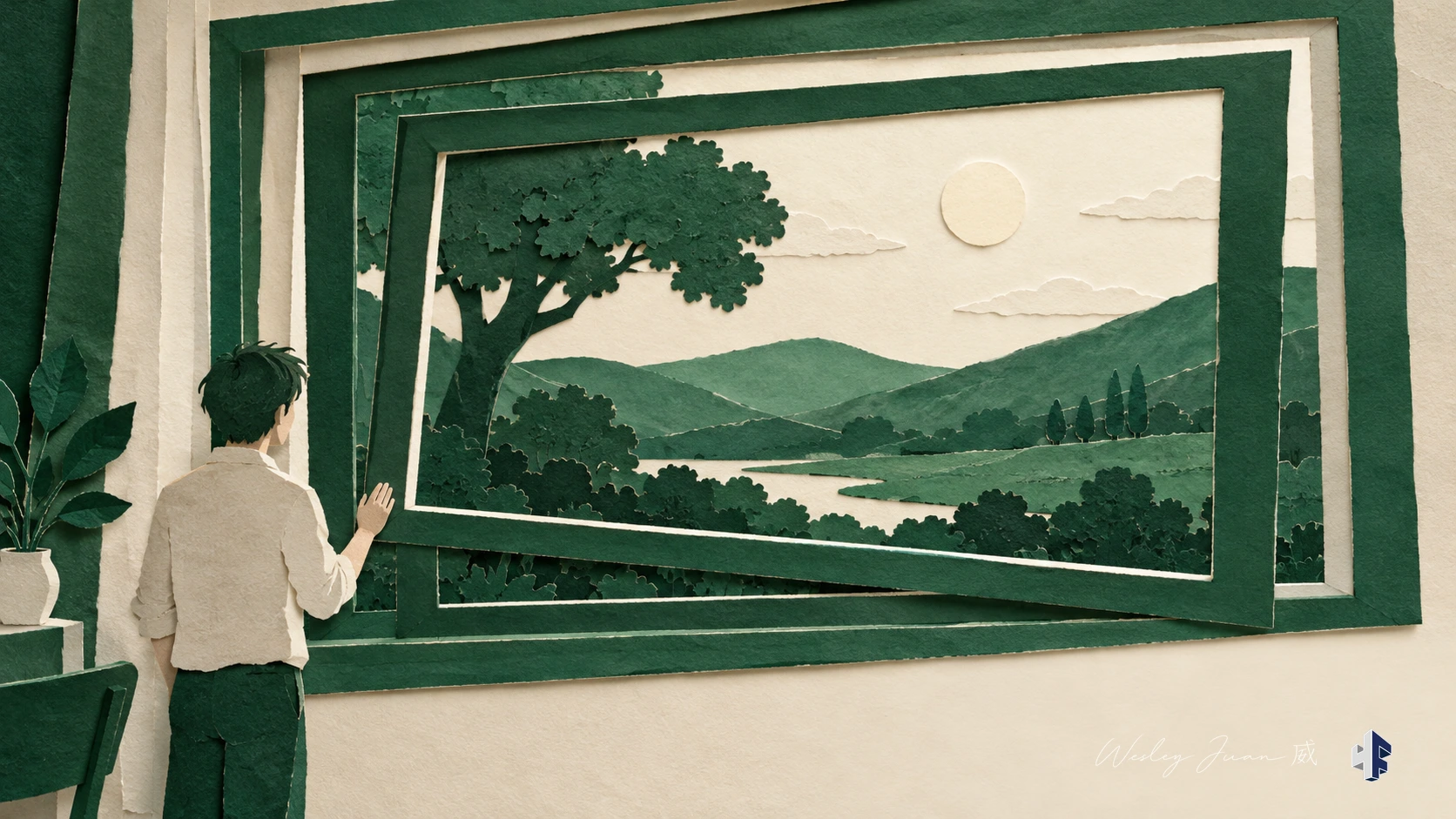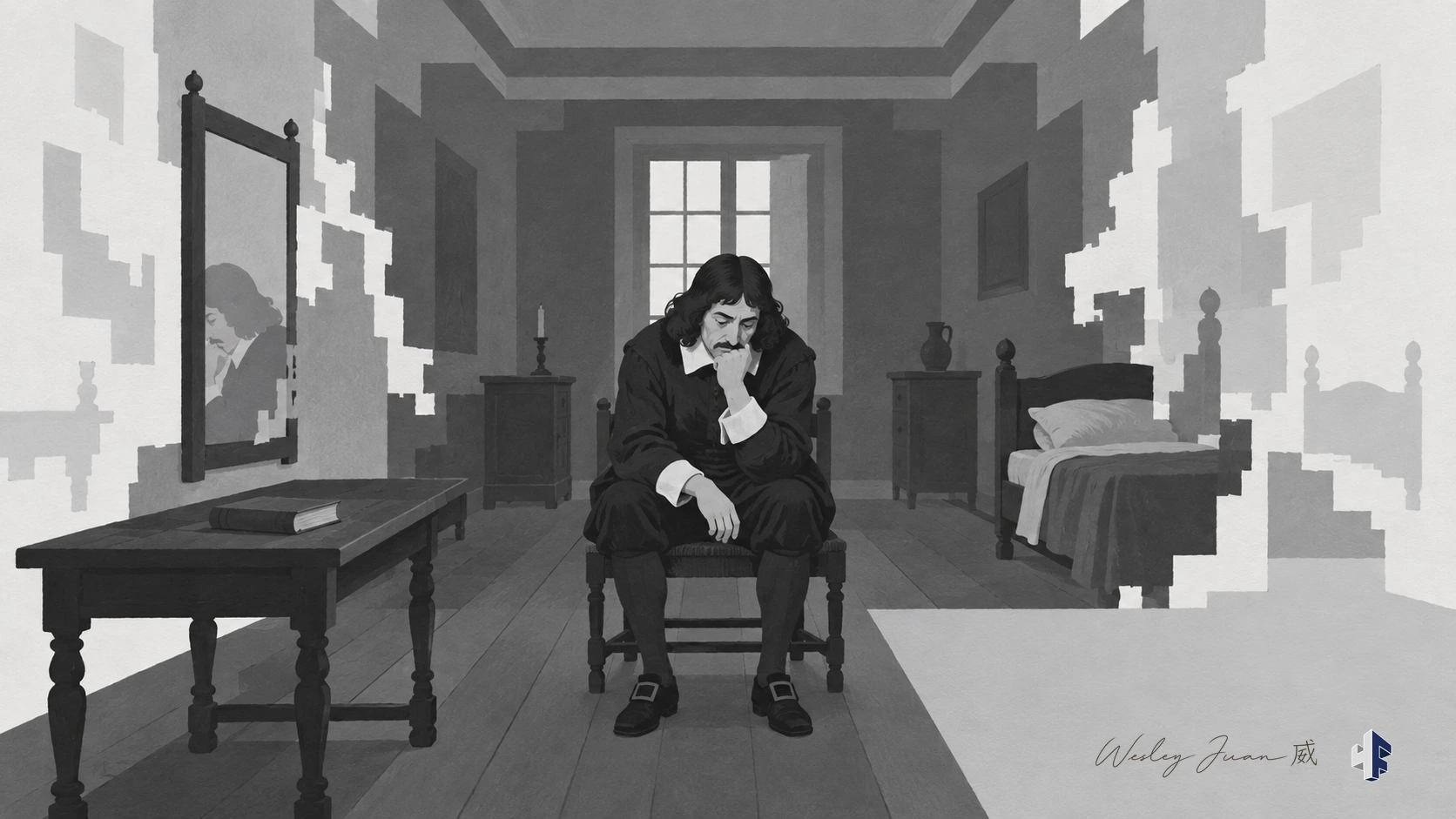
In the Meditations, Descartes lets an imagined doubter loosen his familiar beliefs for a while. Could the senses be wrong? Could what’s in front of him be a dream? If even reasoning were being deceived, what would still be left standing?
This doubt sets an unusually high bar
The dream and the malicious deceiver are devices Descartes uses to push doubt forward. He is looking for a certainty solid enough to be the foundation of knowledge, so he pushes doubt far beyond anything everyday life would ask for.
Along the way, even if he is being deceived, the fact that he is thinking, or doubting, still involves a thinker who exists. That is the way into the cogito.
Getting from that step to the outside world takes Descartes further arguments, and brings further disputes. A familiar slogan is only the trailhead; the road itself still has to be walked step by step.
Doubt you can imagine, and doubt you have reason for
Take philosophy’s standard of absolute certainty and apply it unchanged to every everyday choice, and nothing could ever begin. We often have to make decisions we can revise later, with information that’s incomplete.
Say a friend sends you a screenshot showing an event has been canceled. You can check the organizer’s announcement, the date on the message, the original page. That is checking against a specific risk. If you demand proof that the entire internet can’t possibly be fooling you, the question has moved to a different level.
Both kinds of question are worth discussing, but you need to be clear which job you’re doing right now. Otherwise doubt that keeps expanding turns a message you could have checked into a room with no exit.
Once doubt can point to what to check next, it starts to have a direction.
Back to Mental Gym: find what each certainty rests on
Pick a judgment you’re about to act on and write down how you know it: you saw it yourself, someone told you, you read a record, or you inferred it from something else.
Then don’t spread your doubt evenly across every part. First find the one load-bearing point that matters most and is most likely to change the conclusion. If whether the event is canceled depends on whether the announcement is current, checking the date is more useful than asking ten more people who’ve also only seen the screenshot.
This exercise borrows the logic of methodic doubt. The goal is to make your grounds visible, and to give your checking a scope you can actually finish.
Save some doubt for claims, and some for yourself
“I’m just asking questions” doesn’t automatically make every insinuation reasonable. If you offer another explanation, say that someone is deliberately covering something up, you also owe an account of what that explanation depends on.
Likewise, when the check supports the original announcement, can you accept it for now? If every new piece of evidence gets rewritten as part of the conspiracy, the doubt has lost its chance to correct itself.
That event announcement: you finally know which version to trust. As for proving this isn’t all a dream, that won’t be settled tonight.
Two questions. They don’t have to be answered at the same moment.
There’s always something left to doubt in a decision. For you, how much checking is enough to move forward for now?
Your notes and saves (optional)
Keep a version of your own.
Saved only in this device’s browser and never sent anywhere. Other devices won’t see it, and clearing your browsing data erases it.
Further reading and sources
- Stanford Encyclopedia of Philosophy|Descartes’ Epistemology ↗
Context for methodic doubt and the dream and deceiver hypotheses. The event announcement example is my addition.