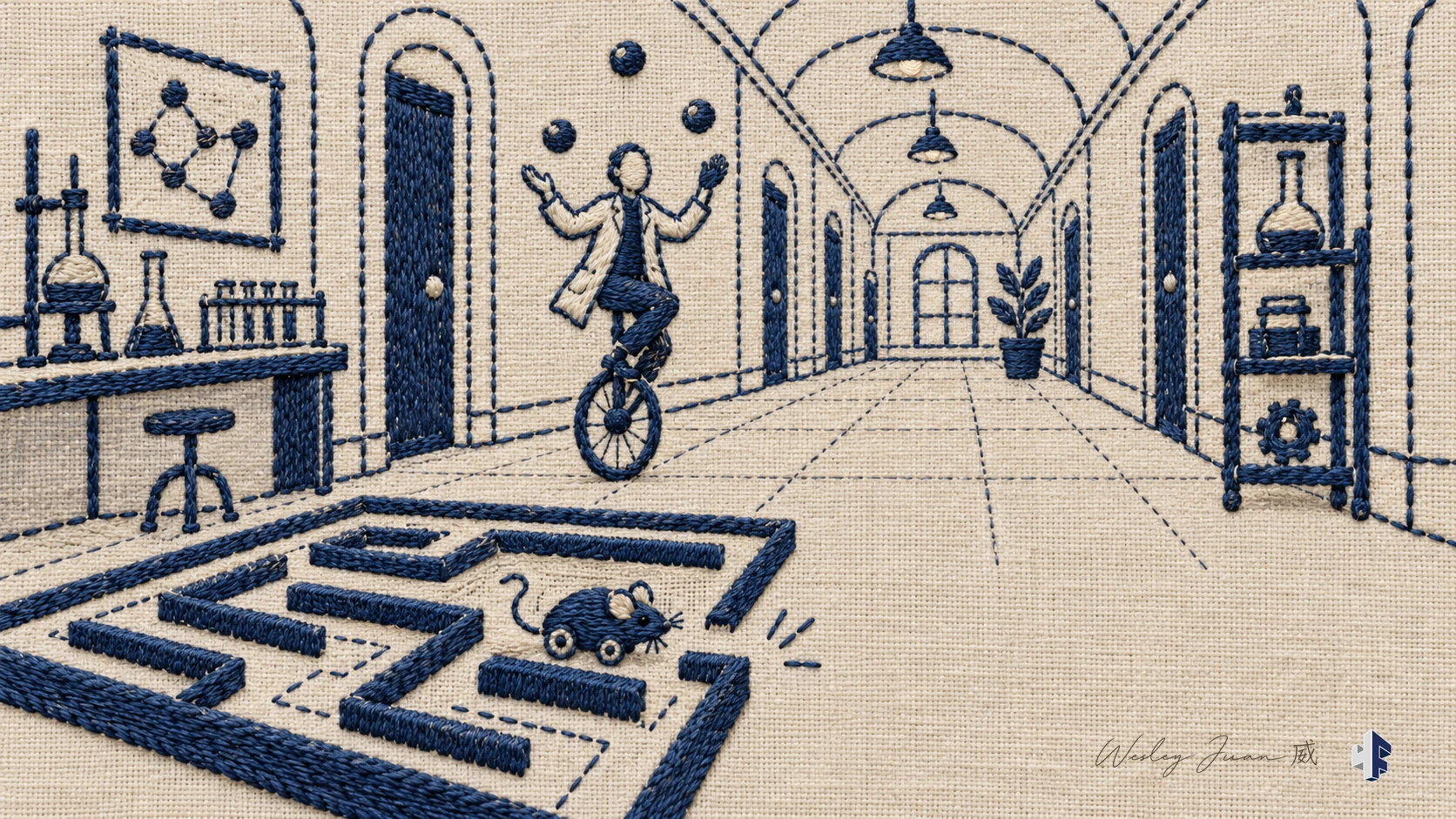
In the Critique of Pure Reason, Kant proposes a turn: instead of only asking how knowledge conforms to objects, ask how objects become things we can experience under the conditions of human knowing. The gaze turns toward the world, and back toward the one doing the looking.
It’s not as simple as switching glasses
For Kant, experience isn’t taking in material from outside exactly as it is. Space, time and the basic forms of understanding take part in how we’re able to experience things at all. He distinguishes appearances, things as they show up for us, from things in themselves, considered apart from these conditions of knowing.
Appearance here doesn’t mean illusion, and it can’t be rewritten as “whatever anyone thinks is true.” We aren’t coloring in the world at random. What Kant is asking is which conditions have to be in place for experience and knowledge to be possible at all.
At this point, let’s bring the question a little closer: when we think we’re only looking, is there some arrangement we brought in beforehand that has already decided what’s easy to see?
Even a form has its way of looking
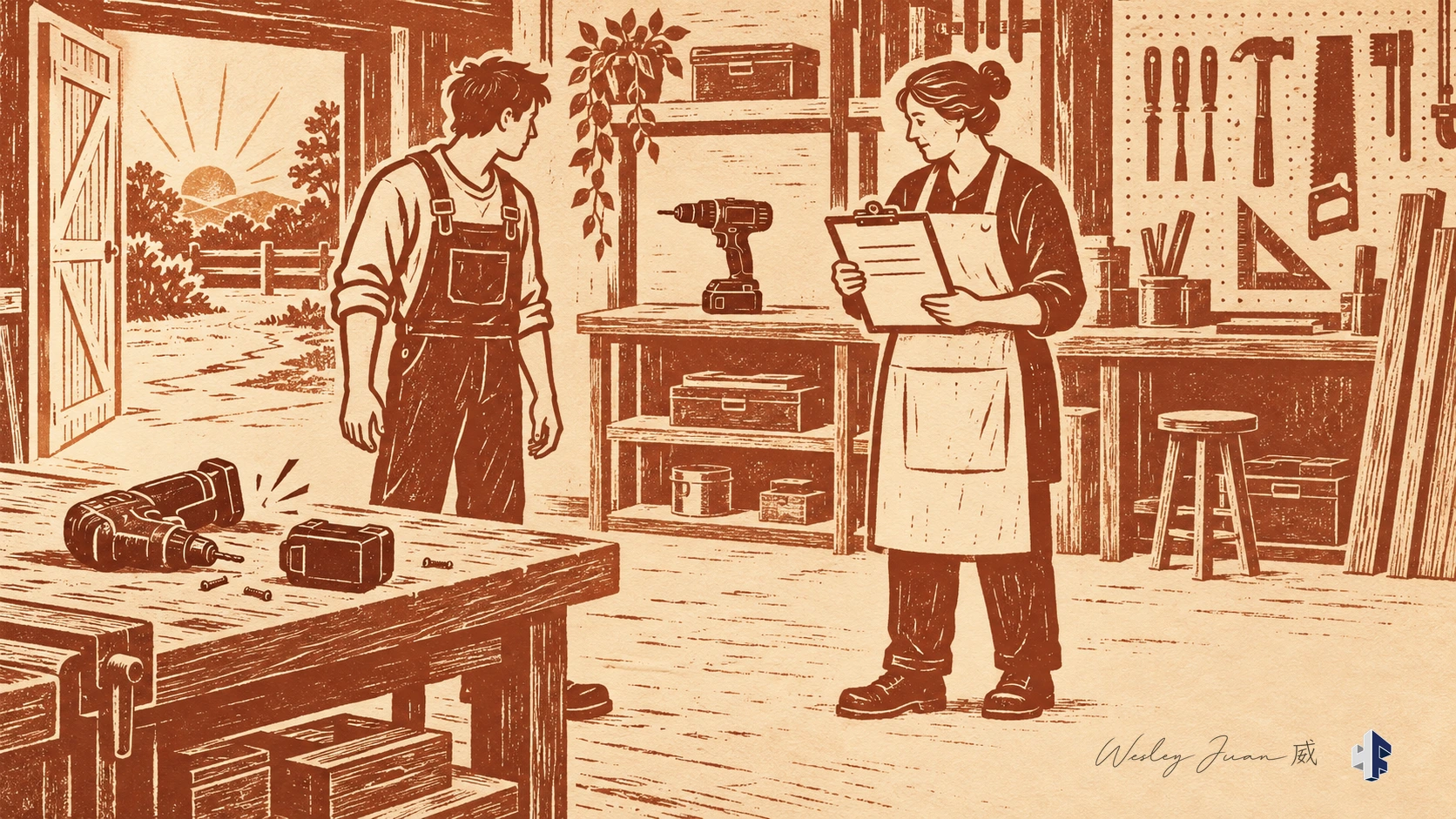
Imagine you’re putting together a survey for an event, and it only asks whether the venue was clean, whether things ran on time and whether the staff were friendly. The scores are great, yet some people still feel the whole event never touched the thing they cared about most.
Everything this survey measured is true. It just never asked whether the content was any help. A frame doesn’t manufacture lies. It manufactures a very tidy absence.
A survey isn’t one of the a priori conditions of knowledge Kant describes; this is a cross-domain connection we’re drawing from the direction of his question. With that difference in place, you can still borrow it as a reminder: besides checking the answers that got filled in, check which answers you allowed to appear.
A frame’s quietest power is keeping some questions off the form entirely.
Same restaurant, different question
Pick something you usually rate by fixed standards. A restaurant judged only on price and portion size, a job only on salary and title, learning only on speed and scores. Start by listing your usual standards, and don’t rush to blame them.
Then add a question from a different direction: Does this place let people relax? What does an ordinary Tuesday in this job look like? Can what you learned be carried into a new situation?
Look at the same thing again and notice which details that never stood out now come to the surface. Your conclusion can change or stay put, but you should see more clearly which set of questions it grew out of.
What crossing over buys you is the layer you can change
When two people judge the same data differently, lay the ways of evaluating it on the table first. Disagreements come in two kinds: the data hasn’t changed, but what the other person is asking has; or everyone uses the same standard but has a different grip on some fact.
The first calls for discussing whether the frame fits; the second calls for checking the data again. Mix them up, and it’s easy to answer a question of values with more numbers, or to wave off a checkable fact with “everyone sees it differently.”
What the survey had no box for, people were still talking about after everyone left.
Every item on the event survey scored high, yet the people who came were still disappointed. How should the survey ask, so it can hear what was never listed as an option?
Your notes and saves (optional)
Keep a version of your own.
Saved only in this device’s browser and never sent anywhere. Other devices won’t see it, and clearing your browsing data erases it.
Further reading and sources
- Stanford Encyclopedia of Philosophy|Immanuel Kant ↗
The basic distinctions between the conditions of knowledge, appearances and things in themselves. The survey frame is my analogy, not Kant’s a priori forms themselves.