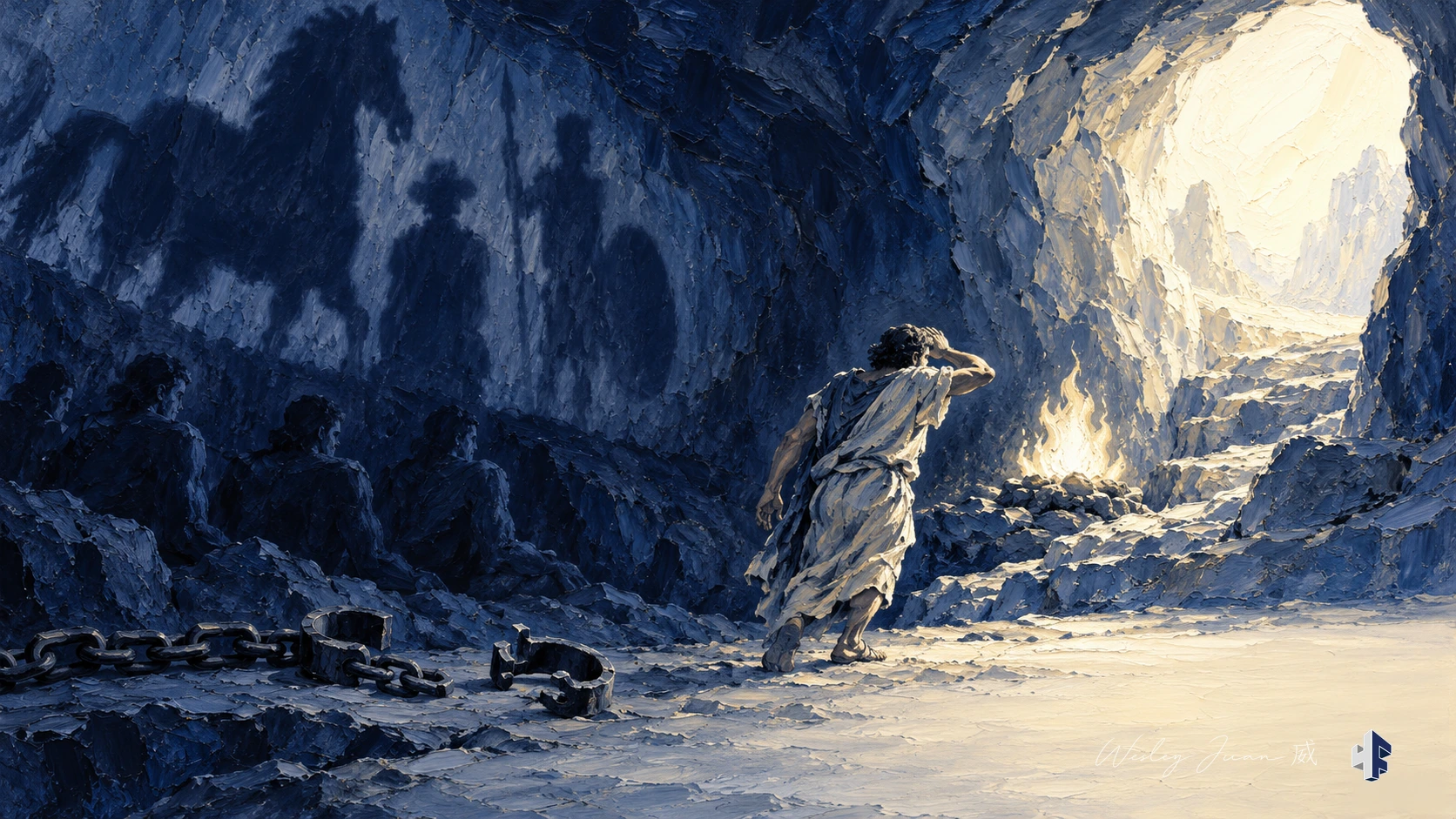
The people in the cave have spent their whole lives facing shadows on a wall. Suppose one day one of them is unchained, turns to see the fire, then walks out of the cave. The first gift he receives is glare, not clarity.
A cave built for teaching
This is the allegory from Book VII of Plato’s Republic. People grow used to treating the images in front of them as the world they know; turning toward the light, and toward the outside, means going through discomfort and adjustment.
The story touches on education, knowledge and levels of reality, and it ties into Plato’s discussion of the good and of how a city should be governed. It isn’t simply “don’t trust your eyes,” and it certainly isn’t that whoever claims to have woken up owns the truth.
Here we’ll pause on a closer question: if the understanding you’ve lived with turns out to be incomplete, how does a person turn around, rather than just being told they’ve been wrong all along?
New light isn’t easier to read than old shadows
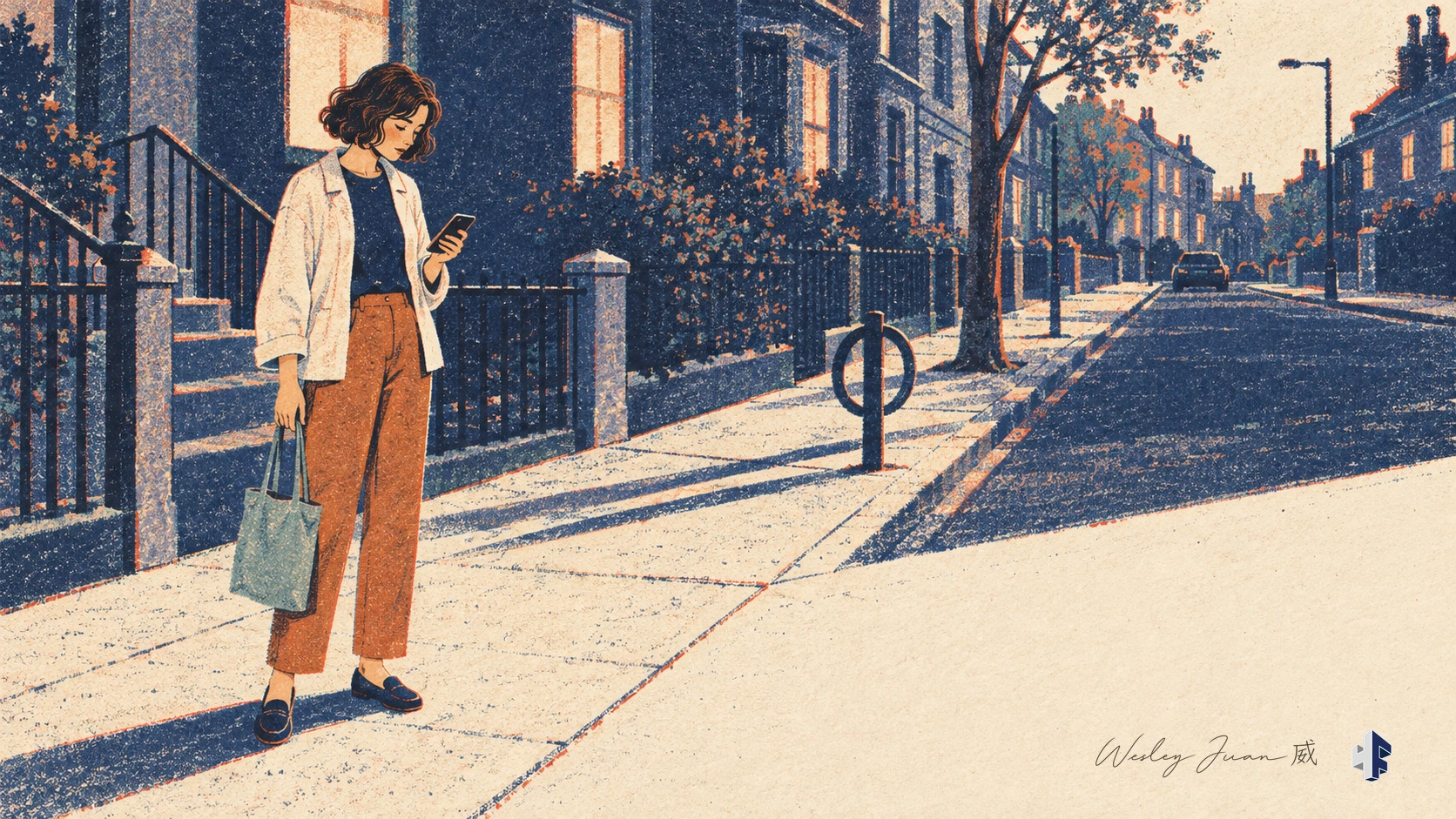
Picture someone who is very good at their job seeing the full customer feedback for the first time. They used to look only at how many jobs they closed. Now they find that some of the parts they finished fastest cost the next person extra time to clean up.
This everyday scene is one we’ve drawn out of the allegory; it isn’t Plato’s. The new data doesn’t make them grateful right away. It means the numbers they used to understand themselves by suddenly need rewriting.
The discomfort doesn’t prove the data is right, and it doesn’t prove they’re just resisting improvement. The next step is still to check how the feedback was collected, what situations it covers, and why the old way made sense. Turning around to look takes more detail; one bright beam just dazzles you first.
After you’ve seen a little more, still ask: what does the spot I’m standing on block from view?
What’s outside the frame
Pick a chart you recently based a decision on, an edited video clip, or a ranking. First say what it genuinely let you see. Then ask how it was made.
Who chose the range? Which stretch of time was kept? What never made it into the frame? Sorted another way, would the conclusion change? None of these questions assume bad intent from whoever made it; every picture requires choices, and those choices deserve to be understood.
Then find one more source that fills a gap. The point isn’t to stand forever in the spot marked “I see through it.” It’s to let your judgment touch more things, including the ones that will make you revise it again.
Don’t cast yourself as the only one awake
The cave allegory is handy for drawing a line: they’re in the shadows, I’m in the light. That reading is convenient, and it stops the questions right at your own feet.
When you want to invite someone to see from another angle, you can also ask them to point out what’s missing from the picture you’re relying on. If they bring a concrete counterexample, check it together, and don’t be quick to explain their objection away as not yet wanting to wake up.
Seeing a little more today doesn’t mean there won’t be shadows later.
When you turn around, what shape will the you who stood in the light leave behind?
New data shows that the efficiency you were proud of kept other people busy cleaning up. How would you rethink the things you thought you did well?
Your notes and saves (optional)
Keep a version of your own.
Saved only in this device’s browser and never sent anywhere. Other devices won’t see it, and clearing your browsing data erases it.
Further reading and sources
- Plato, Republic, Book VII|MIT Internet Classics Archive ↗
The allegory of the cave in English translation. The workplace feedback and media exercises are my additions.