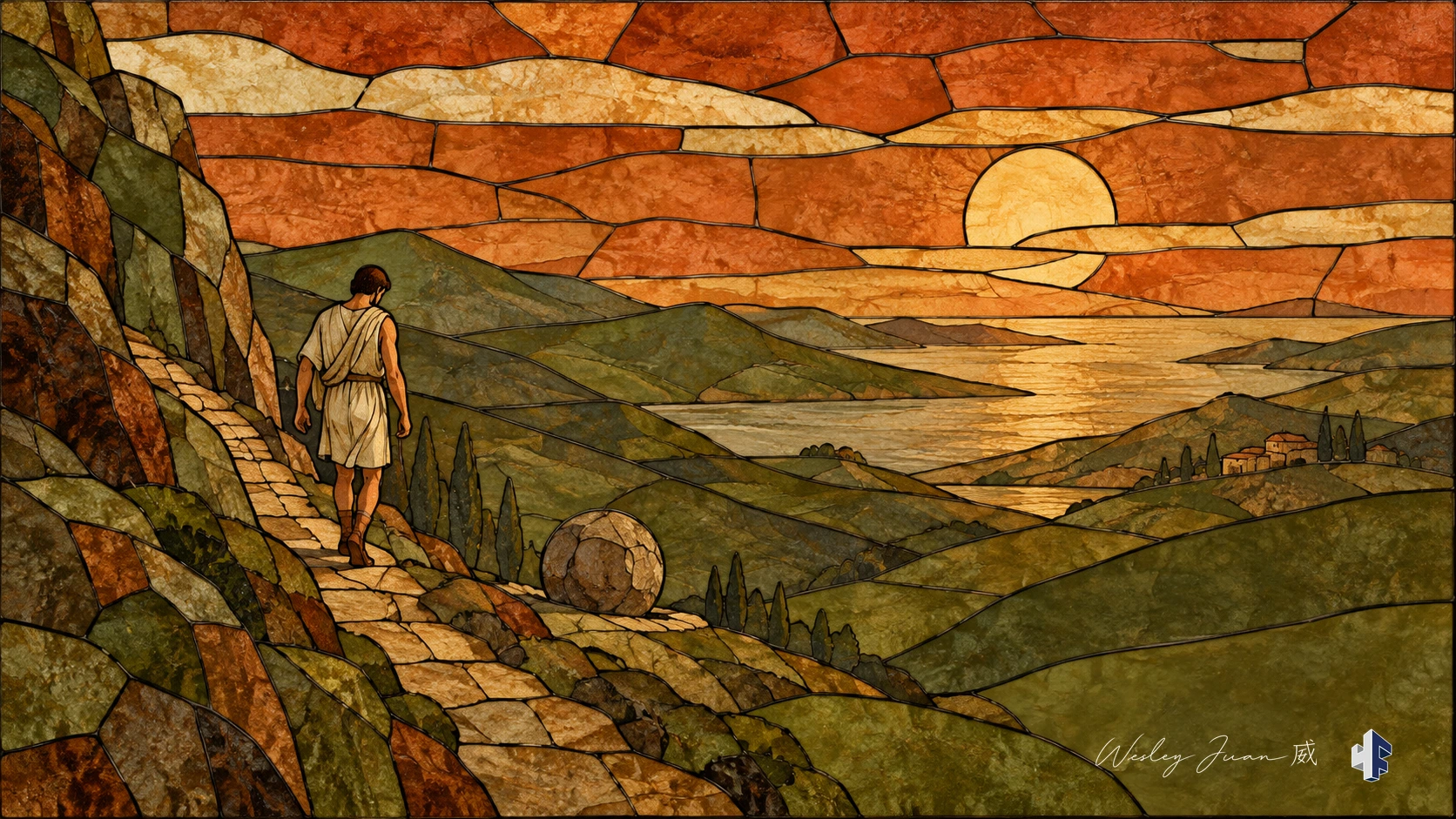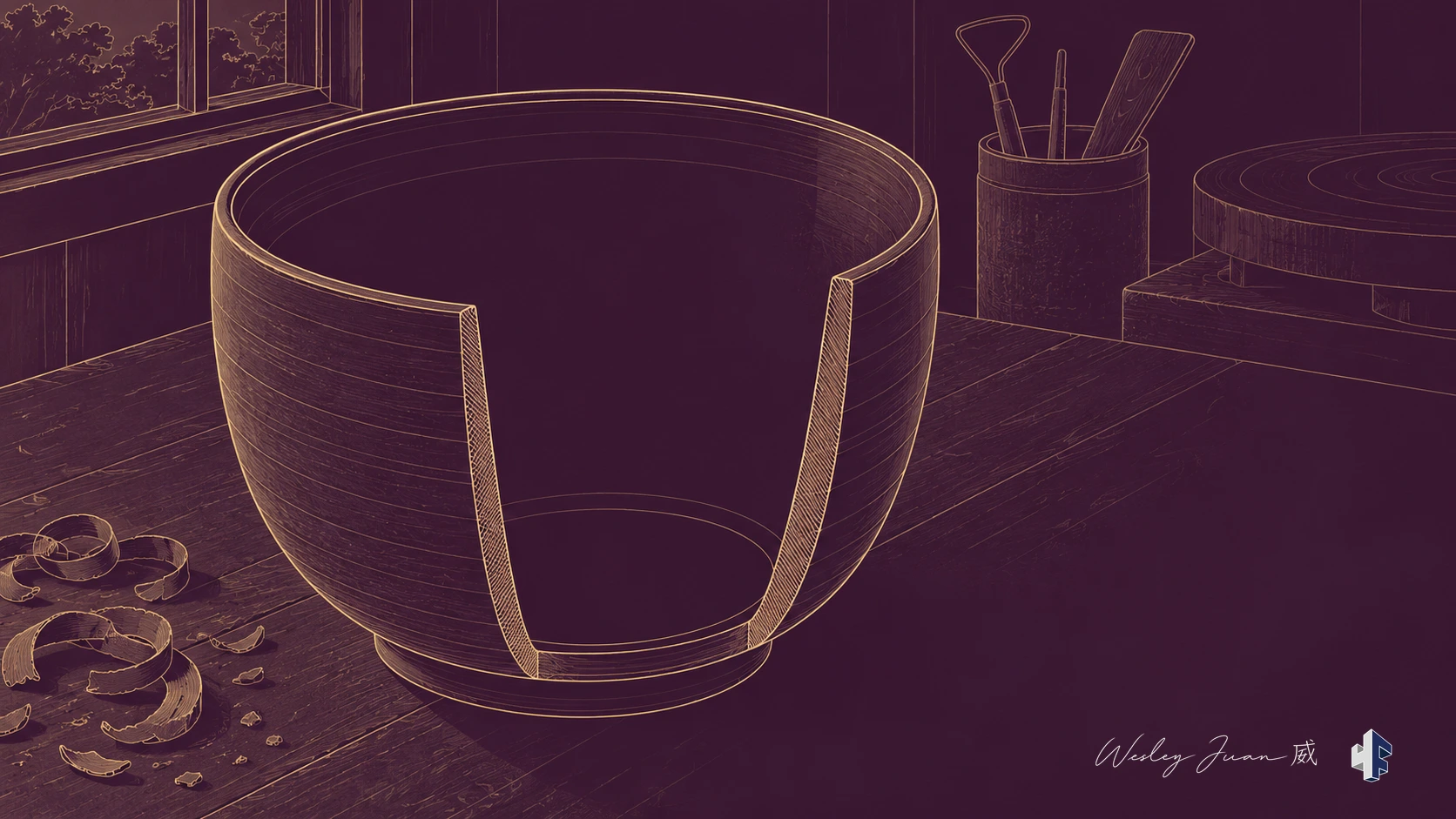
Chapter 11 of the Tao Te Ching uses a cartwheel, a clay vessel and a house to talk about something and nothing. Clay gives the vessel its shape; the space left in the middle is what lets it hold anything. The eye moves from the material you can see to the place left unfilled.
First, look at what a cup leaves empty
Reading this passage, don’t rush to turn it into “do nothing at all.” A cup needs a shape, and it needs a hollow. A room needs walls and a roof, and it needs space for people to move around and for light to come and go.
Something and nothing aren’t simply good and bad here. The visible part sets up the conditions; the space left over is what makes a use possible. That turn gives us a chance to look again at the parts so easily written off as waste.
Who Laozi was, and how the text came together, are much-debated questions. This piece simply follows the chapter’s images of the wheel, the vessel and the room into a few everyday scenes worth trying.
Fill the schedule, and what leaves first?
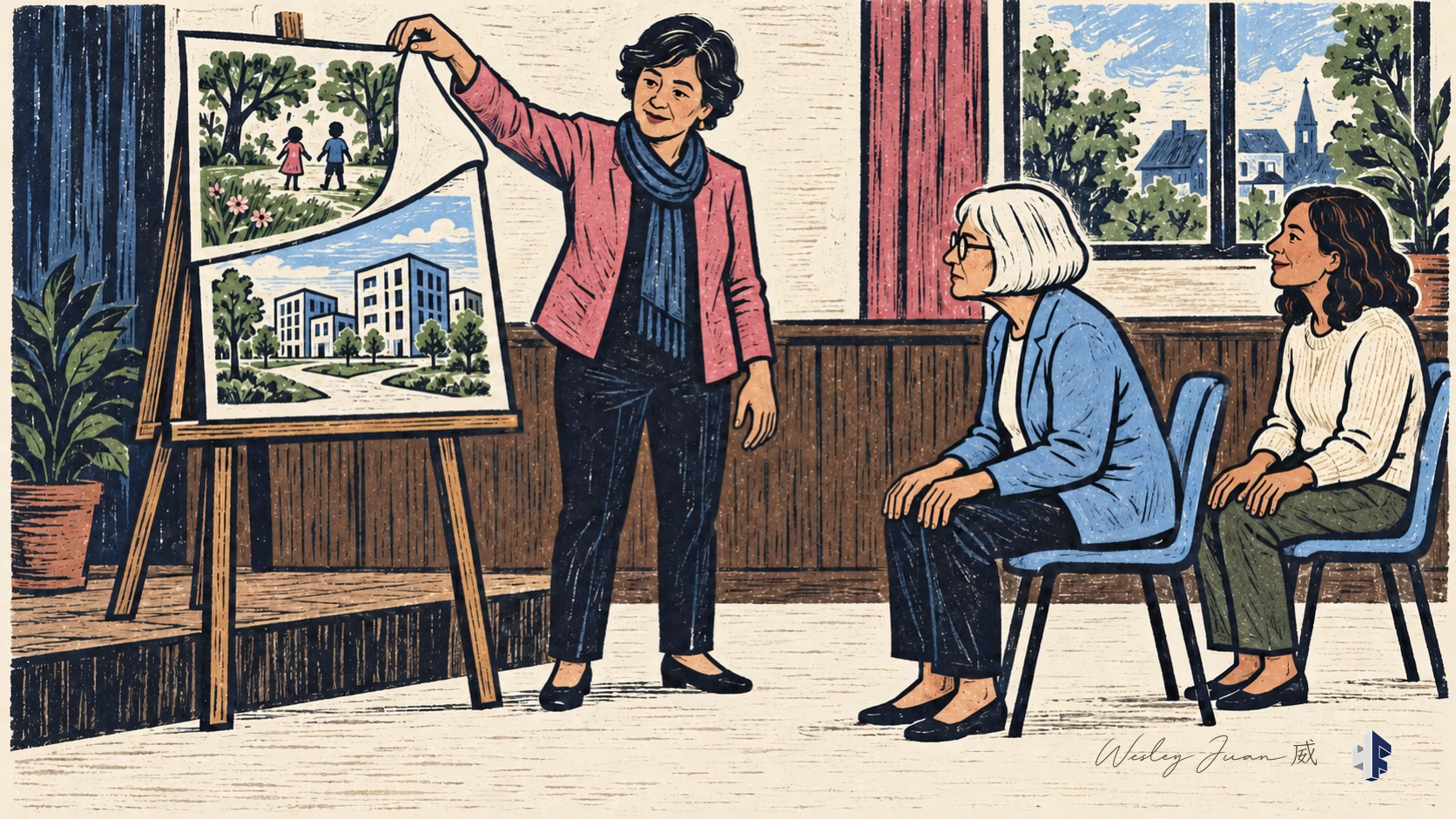
Picture a two-hour conversation. You’ve prepared great material, one segment every fifteen minutes, with a wrap-up scheduled at the end. Every slot has something in it. There’s just nowhere to put the question the other person suddenly raises, the one they really want to talk about.
Here, blank space can be part of the plan. It gives the host a chance to pause and check whether what was just said landed. It also keeps the participants’ thoughts from being squeezed into a last-minute Q&A.
The same thought carries over to page layouts, music and work schedules. White space lets words be read. A pause lets a sentence be heard. A buffer gives the unexpected somewhere to land. How much to leave depends on the material and the room. There’s no ratio that’s always right.
The worth of empty space lies in what it lets in.
The segment that isn’t there
One question fewer on the agenda. In the minutes that open up, someone finally finishes what they started saying earlier. Or it just goes quiet.
The host glances down at the notes, itching to add another question. The other person is still looking out the window.
How long should the gap stay open? The hardest part is not yet knowing what it will hold.
A cup on the table
A cup has a shape of its own. A conversation can, too: a set time, a first question, and then room for things nobody planned to turn up along the way.
If the important things never get discussed, of course the plan can be revisited. But some pauses have no use you can name at the time.
The cup is still empty. Leave it there for now.
Every minute of the conversation is planned, and then the other person suddenly asks something they really care about. How do you decide which of your preparation to set aside?
Your notes and saves (optional)
Keep a version of your own.
Saved only in this device’s browser and never sent anywhere. Other devices won’t see it, and clearing your browsing data erases it.
Further reading and sources
- Tao Te Ching, Chapter 11 | Chinese Text Project ↗
The images of the wheel, the vessel and the room. The conversation, layout and scheduling examples are ones I brought in.
- Stanford Encyclopedia of Philosophy|Laozi ↗
Background on the text and its ideas.