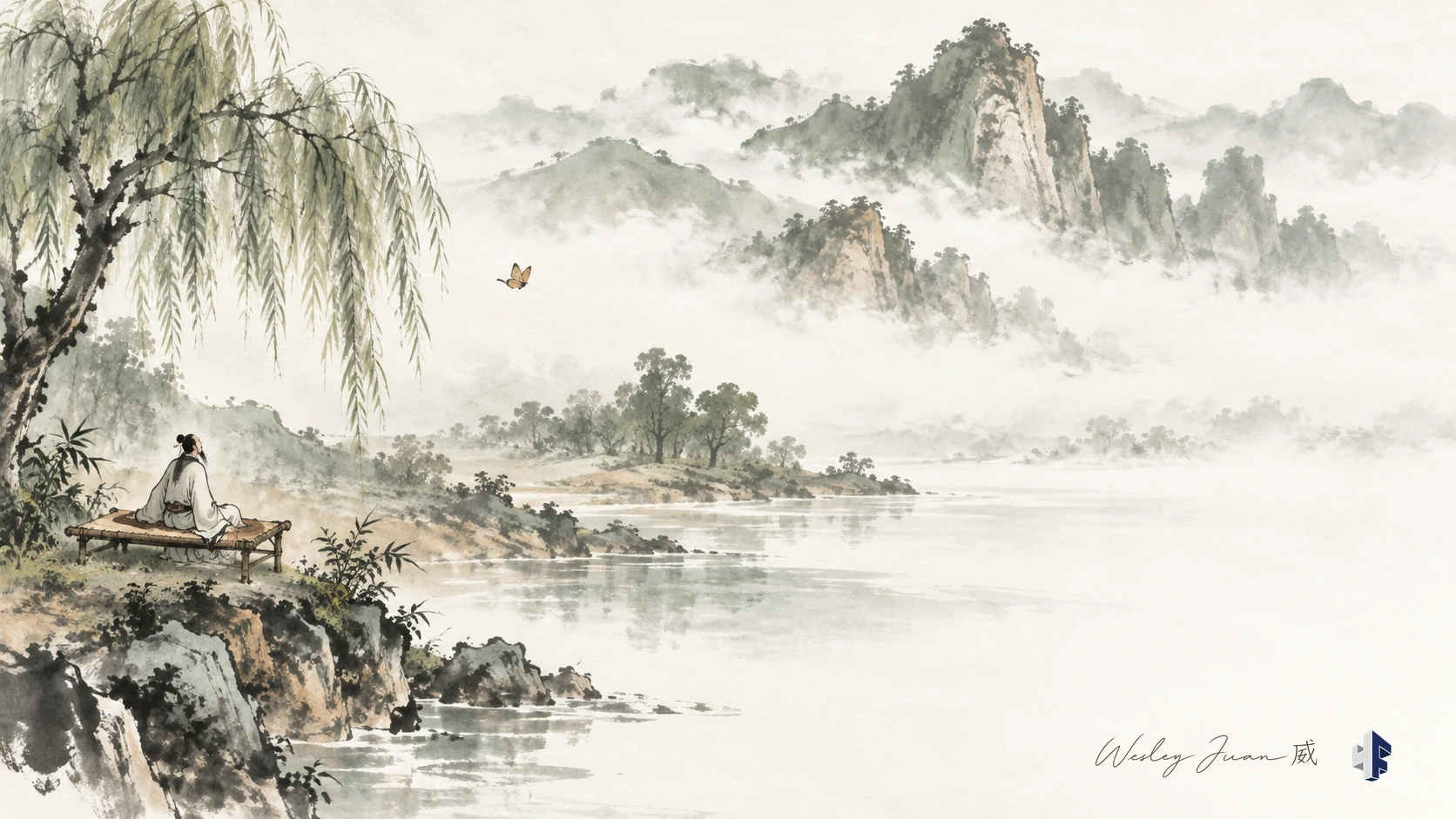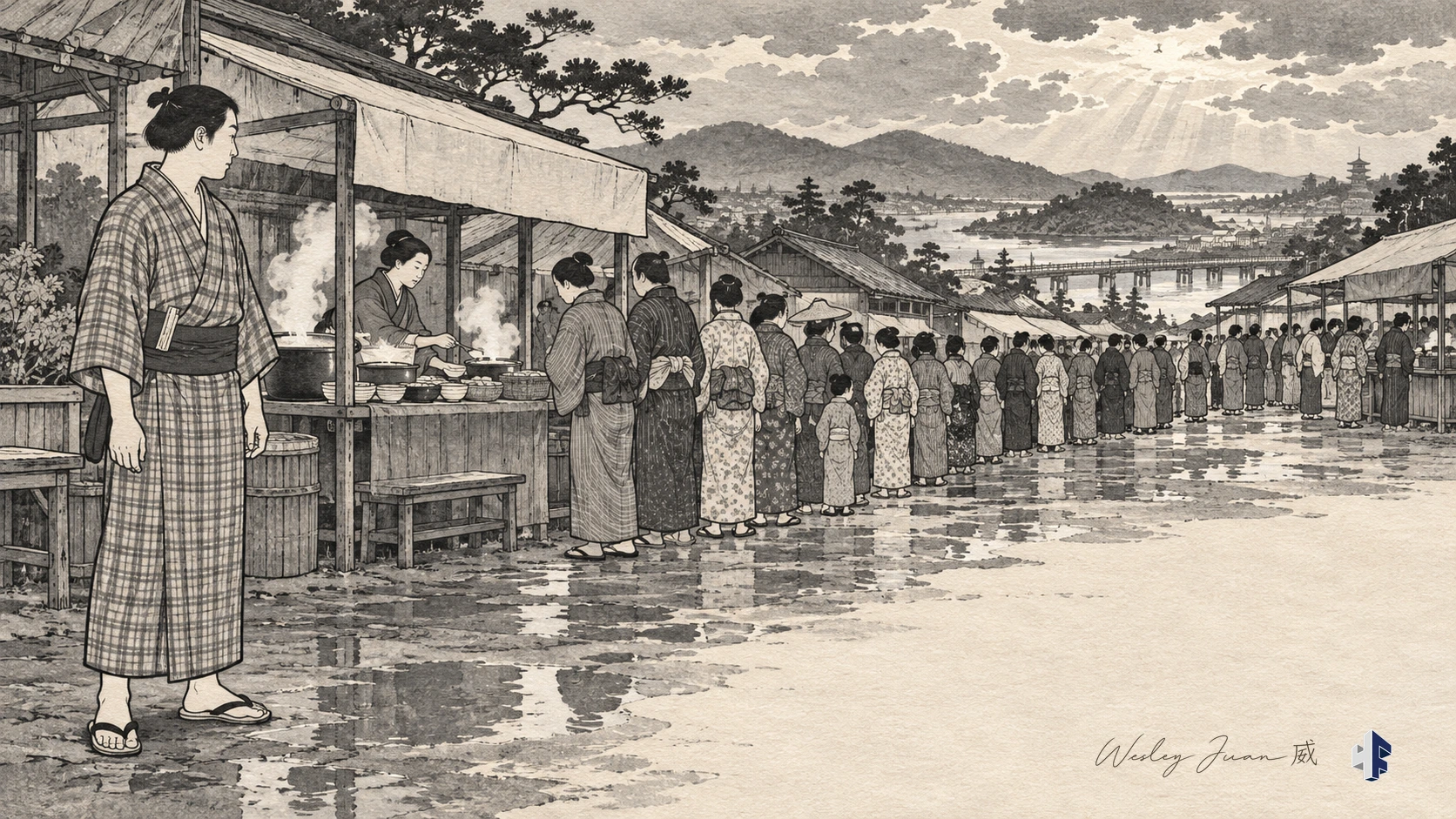
Picture yourself spending ages getting ready for a dinner party. You noted everyone’s tastes, juggled the timing, even looked after the one friend who won’t eat cilantro. On the day, it pours. Someone cancels at the last minute; someone else eats and leaves. Clearing the table, you suddenly want to ask: I put so much care into this. Why did it still turn out like this?
The rain never read your prep list
Chapter 5 of the Tao Te Ching says: “Heaven and Earth are not humane; they treat the ten thousand things as straw dogs. The sage is not humane; he treats the people as straw dogs.” Straw dogs were dogs bound from grass and used in sacrifices. The image grates, especially when we’re hoping what we give will earn us some care in return.
Wang Bi reads Heaven and Earth here as letting things follow their own course, so that all things grow and change by their own motion. Follow that reading and you get this: the rain doesn’t check whether you’re a good person before it falls. When the sky clears, it hasn’t lined up a reward for everyone’s effort. Heaven and Earth don’t follow human feelings, and they keep no ledger that pays back every entry.
But the people at the dinner aren’t the rain. The rain can’t make you a promise. Your friend did promise to help. File them both under “Heaven and Earth are not humane,” and a broken promise that could have been talked through vanishes along with everything else. The world won’t fill my wishes like an order, but actual people can still work out together how to treat each other.
Take away the payoff. What’s left on the table?
Back to that table. If you knew beforehand that no one would compliment you, would you still cook this meal? Some would, because they love cooking and love having people in the house. Others discover they’re actually exhausted, and what they really hoped for was to be seen.
Both answers deserve more listening. Wanting a response is part of any relationship. The problem is whether an expectation you never voiced has quietly turned into a contract you assume everyone signed. You think you’re just hosting, while part of you is still waiting for a payment to clear.
It can go the other way, too. You know perfectly well this dinner won’t bring you anything, and you still want to host it. Because a friend has been having a hard time. Because it’s been ages since you all sat down together. Because you want this evening to exist. Meaning can grow out of what you’re willing to put yourself into, without waiting for the world to mail you a warranty first.
Of the things the world never promised you, some you can let go, and some people can promise each other anew.
Follow your heart, and ask where it’s coming from
When payback is no longer the only reason, you seem to gain a little freedom. But the “want” in “I’ll do whatever I want” deserves a sit-down too. Do you want to throw an even more perfect party because you enjoy it, or to prove last time’s flat evening wasn’t your fault? Have you decided not to invite anyone because you need a rest, or because you hope people will finally notice how much you matter?
The same act can carry very different intentions. Canceling the party can be self-care, or a letter of protest you never sent. Inviting people again can come from generosity, or just from fear of losing your place. You don’t have to pick only one answer. People often bring several reasons into the kitchen at once.
This is where practicing freedom starts: notice what you’re waiting for, then decide whether to keep waiting. Some people will say what they need out loud. Some will make the party smaller. Some will still cook a whole spread. An ordinary choice made after thinking it through has its own freedom.
Heaven and Earth play no favorites. We can still care.
If Heaven and Earth don’t arrange fairness for us, do we still need to look after each other? Two very different roads split off here. One says: there’s no guarantee, so why should I try? The other says: precisely because no one will take care of everything automatically, what I do has a real place.
This is a fork we take on our way from that ancient line to today. The same chapter also talks about the sage, the bellows between Heaven and Earth, and holding to the center. It has thoughts on governing and acting, and its few lines don’t write answers for every kind of freedom a modern person might want. Still, the image of the bellows, hollow and therefore able to make wind, is a reminder: stuff your expectations too full and there’s no room even for the people who actually show up.
You can drop the job of keeping everyone happy and still do what you said you’d do. You can refuse to treat one cold shoulder as a verdict on your life and still tell your friend you really did need help that day. Admitting the world doesn’t revolve around you doesn’t make you colder. It makes your care more precise: who’s in front of me, what happened, how much can I do?
The next party can start with a phone call
If you have something of your own that falls under “I’ve tried this hard, so why haven’t I gotten it yet?”, lay it out first. What did the other person clearly promise? What did you expect on your own? What was never in anyone’s control? Those three things call for different responses.
Promises can be checked. Expectations can be explained. What no one controls can be given some slack. Then ask: if there’s no applause, which part do I still want to keep? If some responses really matter to me, how will I ask for them, instead of waiting for someone to guess?
The next party is down to four people, each bringing a dish. Or it’s as lively as ever, except this time you asked a friend ahead of time to stay and help with the dishes. Halfway through the washing up, someone in the kitchen brings up that joke from earlier.
You put real care into a dinner, and your friends eat and leave. When you invite them next time, what fun do you want to keep, and which expectations do you want to say out loud?
Your notes and saves (optional)
Keep a version of your own.
Saved only in this device’s browser and never sent anywhere. Other devices won’t see it, and clearing your browsing data erases it.
Further reading and sources
- Tao Te Ching, Chapter 5 ↗
“Heaven and Earth are not humane,” the straw dogs, the bellows and holding to the center, read together as one chapter.
- Wang Bi, Commentary on the Tao Te Ching | Chapter 5 ↗
His gloss on letting things follow their own course is where this reading starts.