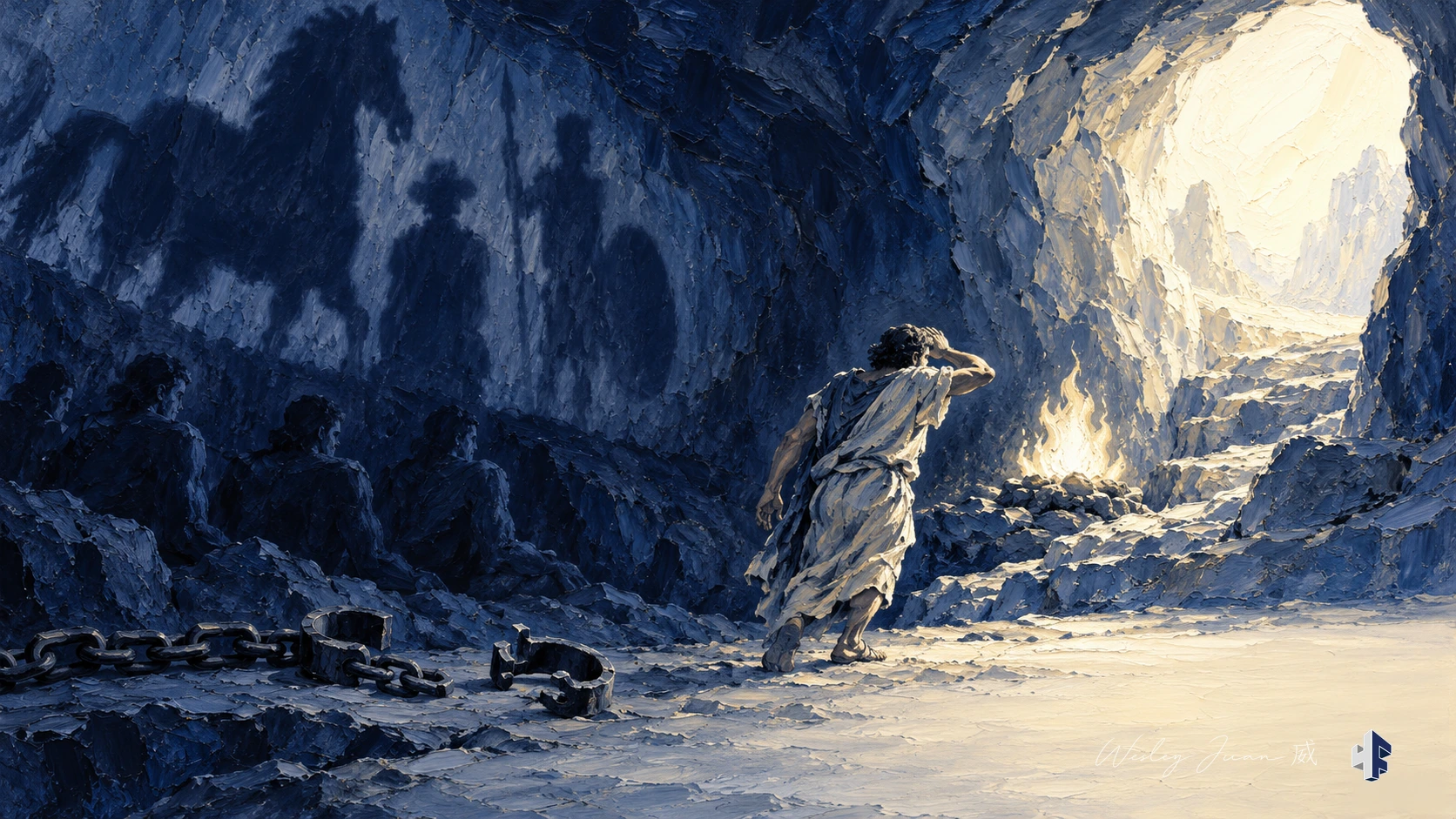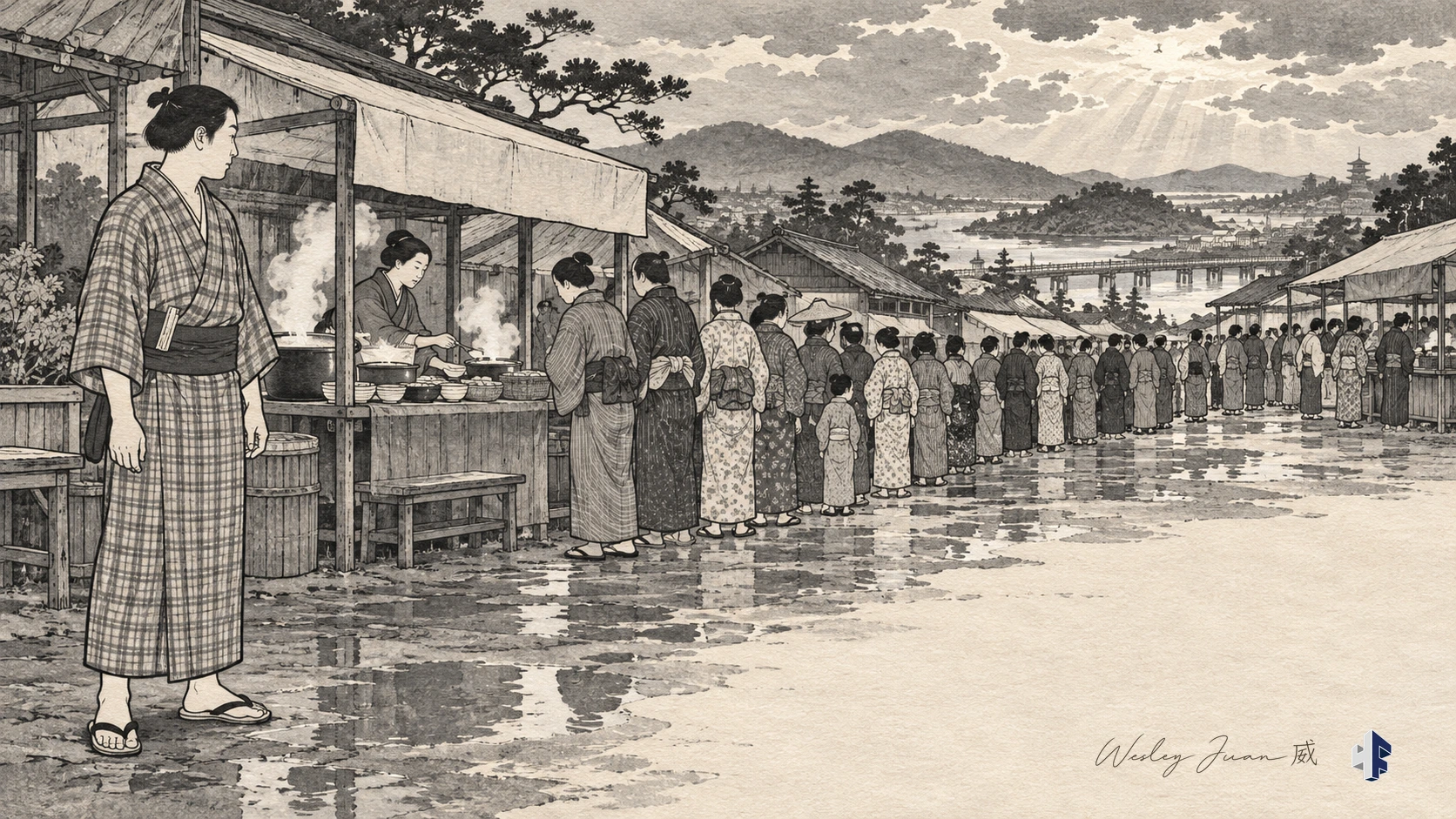
On the day of the event, the rain stops. The outdoor stall you were afraid would sit empty suddenly has a line snaking down the block. Someone pats you on the shoulder and says you’ve got a good eye. You’re pleased, too. But how much of today’s work did luck do, and how much did your eye?
Go back to the morning before you knew
Picture deciding whether to order extra ingredients for a market. The forecast is shaky, advance ticket sales are thin, and nobody knows how big the crowd will be. You can stock light and close when you sell out, or order more and eat the loss on whatever doesn’t sell.
A sellout doesn’t automatically tell you whether ordering extra was reasonable. One person worked out an acceptable range from presales, transit, and past events. Another looked at nothing and went on “I just feel like it’ll be packed.” Both got the same pretty result. They didn’t make the same kind of judgment.
To tell them apart, you have to go back to the moment before the result showed up. What did you have in hand then, and what was simply unknowable?
Put the decision back in its own weather
After the fact, it’s easy to pave a neat path backward. If the crowd is big, the event down the street becomes a plus you saw coming. If it’s small, the same event becomes the thing that stole your customers. Both stories hang together. Neither was the reason you actually used at the time.
So before you decide, leave yourself a few lines: what I expect to happen, what that’s based on, where I could be wrong, and how much I can absorb if I am. Writing it down gives your future self a starting point that can’t be quietly rewritten.
If you never checked what else was on nearby, admit you didn’t check. You’ll learn more from that than from slipping what you found out later into your past self’s head.
Before the result came in, why were you willing to choose this?
Good methods have bad days too
A decision that thought the risks through can still run into a rare, bad outcome. That doesn’t mean the method was flawless, and it doesn’t mean you should throw the whole thing out. Ask which it was: a risk you knew about and were willing to take, or something important you missed that you could have found?
The first shows you what it feels like when the cost actually arrives. The second points to a part of your process that needs fixing. Both deserve a look back, but you’re repairing different things.
Flip it, and lucky wins need a review too. If you’d stocked more than you could afford to lose and just happened to sell out that day, don’t treat the luck as a reason to bet bigger next time. The result can make you happy and the method can still need fixing.
| The result | The judgment at the time | What to do next |
|---|---|---|
| Success | Grounded, with a cap on the risk | Keep the method, and ask what tailwinds helped this time. |
| Success | Unchecked, with more at stake than you could afford | Enjoy it, but don’t treat luck as a reason to bet bigger. |
| Failure | A known risk, and an affordable one | Recheck the original estimate before you scrap everything. |
| Failure | Missed important information that was available | Close that gap in your prep for next time. |
A set of questions for looking back at a decision. Whether the method was sound still depends on what you could have known at the time.
A review worth doing changes the next time
For decisions that matter, keep two pages. Write the first before you start; fill in the second after things play out. On page two, record what actually happened first, then hold it up against page one: which expectations missed, what information was available at the time, and what you’ll do differently next time.
You don’t need a decision memo for every cup of coffee. Stick to choices that come around again and cost enough to matter. The note can be short. It just has to come before the result.
That’s where experience earns its keep. Over time you remember more than whether you won or lost; you remember which reasons held up, and under what conditions. The next time the weather looks similar, you’ll have a little more to work with.
The market sold out, and everyone says ordering extra was a smart call. If it had rained all day, how would you judge the same decision?
Your notes and saves (optional)
Keep a version of your own.
Saved only in this device’s browser and never sent anywhere. Other devices won’t see it, and clearing your browsing data erases it.