Helsinki, May 28, 1987.
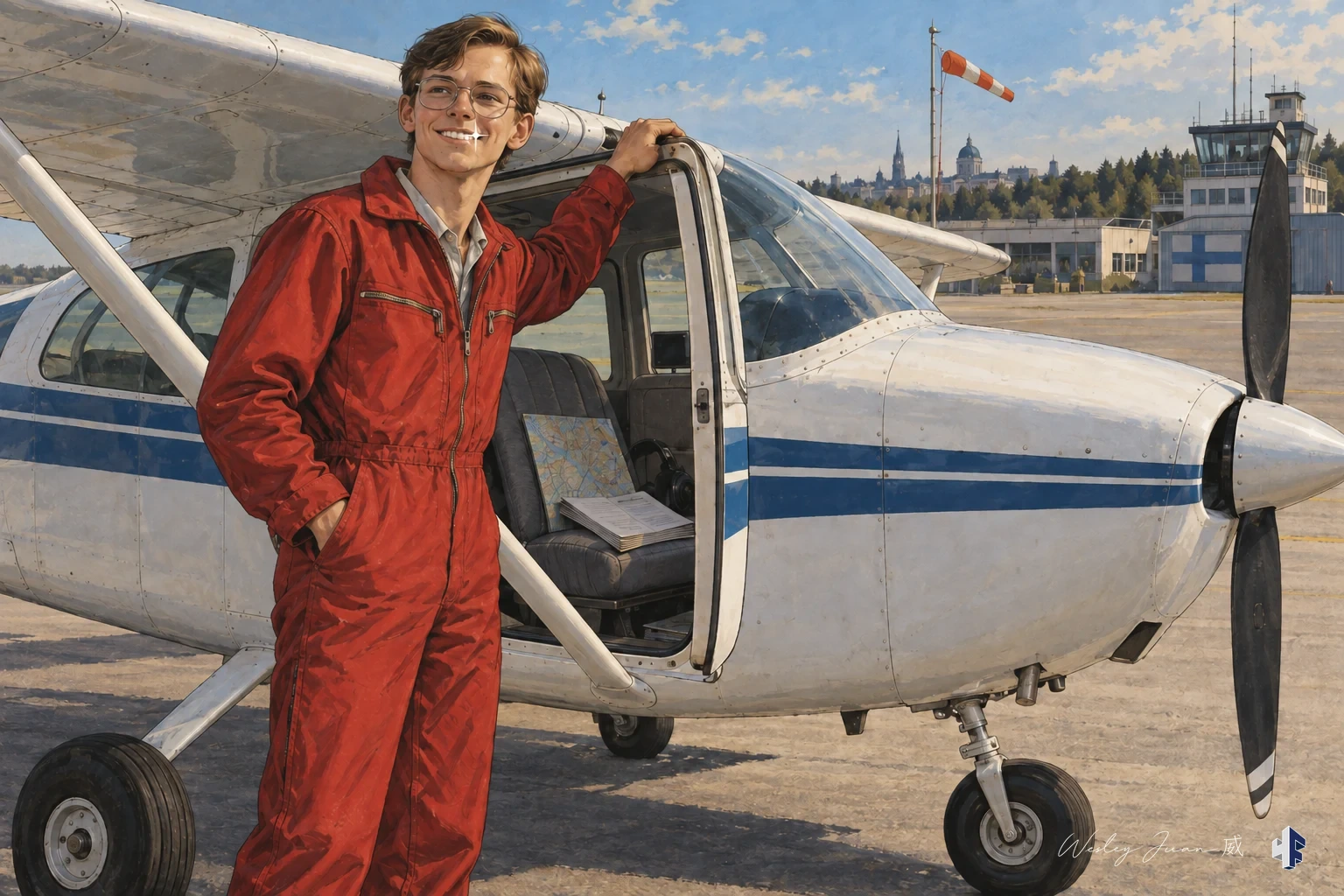
Mathias Rust told the tower he was going to Stockholm.
He was from West Germany, not quite nineteen. The rented Cessna 172 had four seats, and today he was the only one in them. Beside him lay a peace manifesto he planned to hand to Gorbachev in person.
No appointment.
He put his map away and started the engine.
After takeoff, he turned east.
Something’s coming in
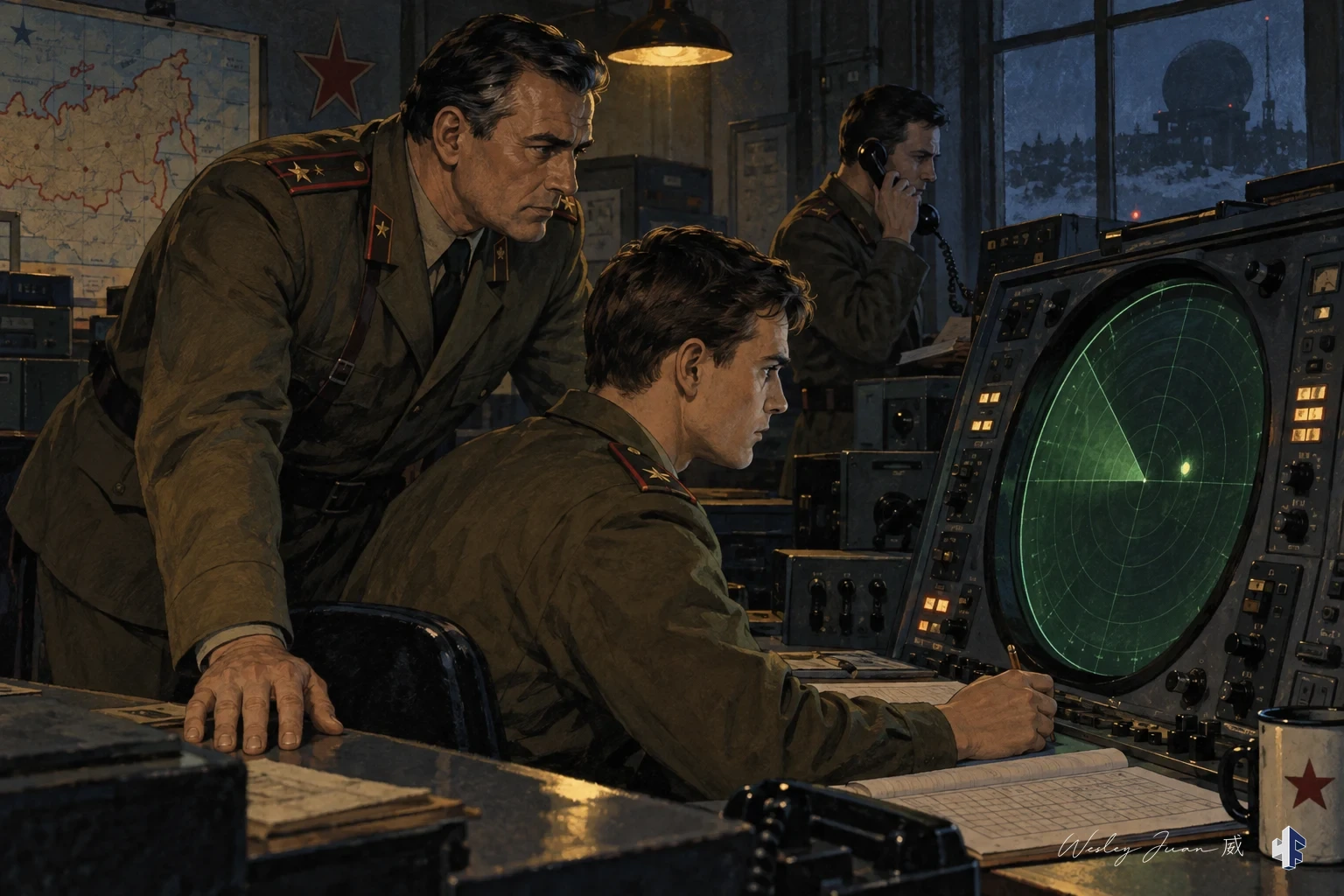
A radar operator put his finger up to the screen.
The blip was small and heading inland. He checked the track and called over an officer. The officer watched for a while, then picked up the phone.
“Identity?”
“Not yet confirmed.”
“Verify again.”
Missile units went on alert.
Rust had no idea anyone was studying him. He looked at the map, at the instruments, at the clouds ahead. It was loud in the cockpit, and with nobody else aboard, there was nothing that had to be said anyway.
On the ground, the call was put through to another desk.
“Civilian?”
“Not yet confirmed.”
“Verify again.”
The blip moved a little farther on.
They really did come
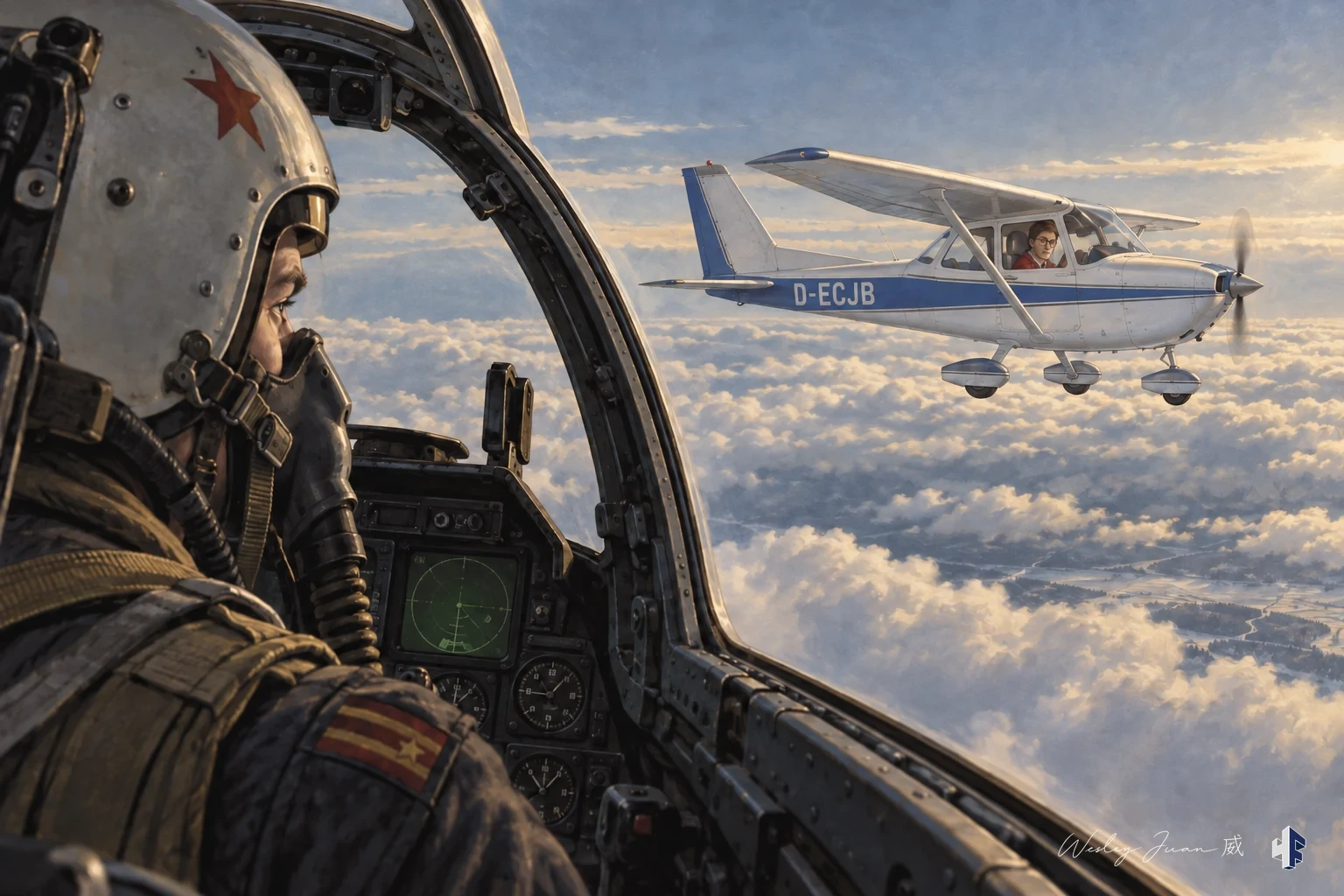
First Rust saw a shadow.
Then a fighter jet.
A moment ago the sky had been wide open. Suddenly there wasn’t enough of it. He gripped the yoke and watched the other plane close in. Close enough to see the cockpit. Close enough to see the pilot turn his head.
The pilot was looking at him, too.
Four seats. One person.
The peace manifesto for Gorbachev was still lying beside him.
Rust waited. What was he supposed to do? Follow? Descend? He kept his eyes on the fighter, waiting for a signal he could understand.
The fighter swept past.
He turned to look for it. It circled and came back into view. His hands didn’t loosen.
Then the fighter flew off.
The Cessna’s engine sounded the same as ever. Only then did Rust notice he’d had his shoulders hunched the whole time.
Four years earlier, the Soviet Union had shot down Korean Air Lines Flight 007. All 269 people on board were killed.
Now the man who could see this little plane clearly did not get to decide on his own whether to fire.
On the ground, another phone was picked up.
Verify again
Along the way, some took him for one of their own planes.
Others thought he was a helicopter working somewhere nearby.
Same Cessna, same Rust inside. Someone had already changed who he was.
Not every station could see him the whole way. Tracking dropped out, the target reappeared, messages passed from one unit to the next. Whoever picked up the phone had their own map in front of them, their own log, and whatever judgment the last shift had left behind.
“Is it the same one?”
That still had to be checked.
An officer held the paper flat with one hand, listened, crossed out a line and wrote another.
Before he’d finished the entry, the little plane had left their sector.
It was headed for Moscow.
Red Square has no runway
Rust started looking down for landmarks.
Moscow was easy to spot on a map. The Moscow in front of him was nothing but buildings. He looked up, looked down, looked up again. He hadn’t flown all this way to get lost once he got there.
Then he saw the red walls.
He circled over and dropped lower.
The square was full of people.
They were strolling, chatting. Nobody had cleared any space just because a young West German wanted to come talk about peace.
The big bridge nearby, though, had a stretch of open road.
Rust circled once more and lined up the nose.
The flight had finally reached the part where nobody needed to phone for instructions. Where to set down, how low to fly, when to let the wheels touch: all of it was his call now.
The bridge rose to meet him.
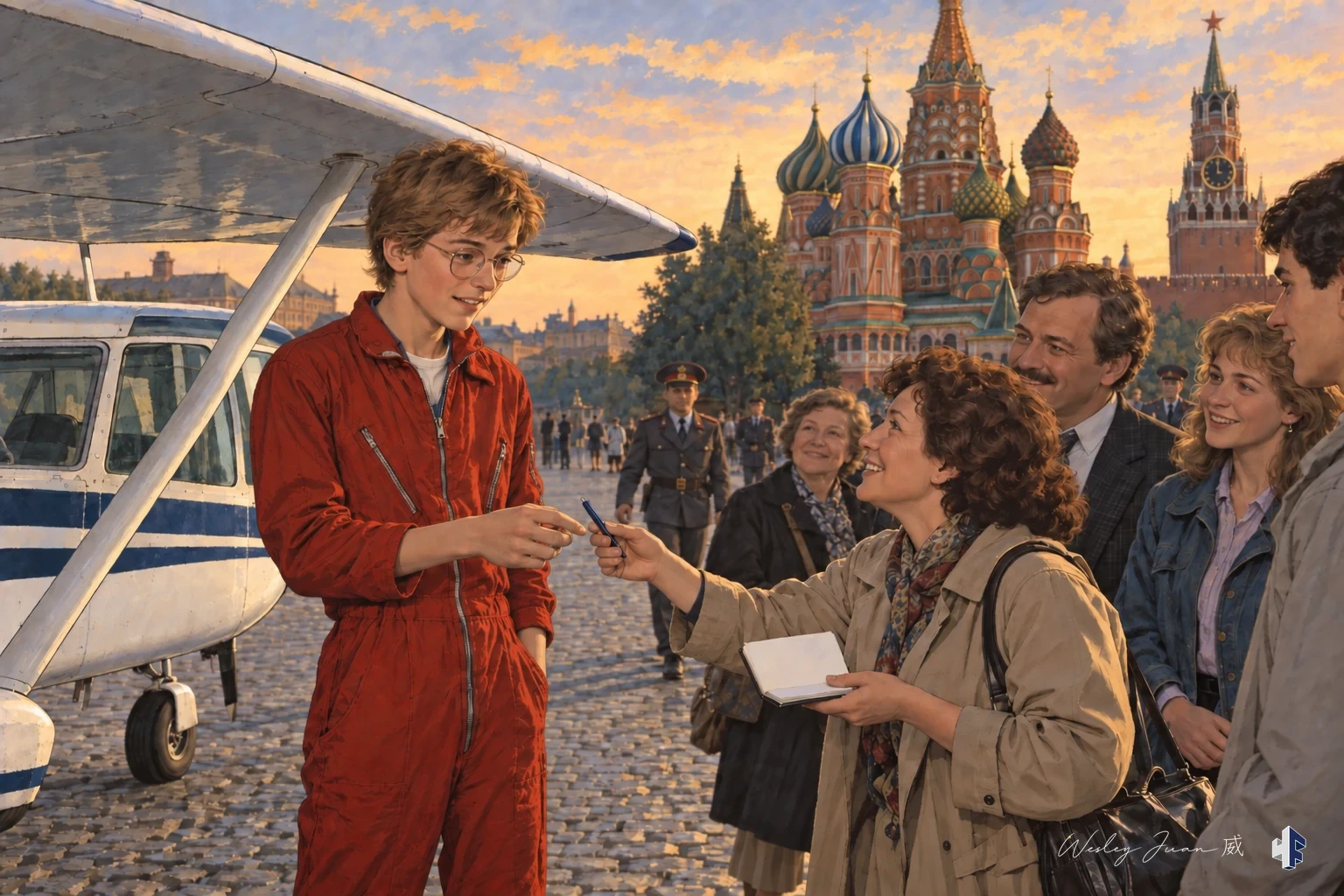
The wheels touched; the plane bounced. He steadied it and kept taxiing, finally stopping beside Red Square, near St. Basil’s Cathedral.
Just over five hours.
He switched off the engine.
The propeller turned slower and slower, then stopped. In the sudden quiet, he sat there looking at the people outside.
The people outside were looking at him, too.
He reached over and opened the door.
A hand reaches out
First a few people, then a few more. The ones at the back stood on tiptoe to see what was going on up front.
An airplane.
What was an airplane doing here?
Someone looked around. Were they shooting a movie? Where was the camera?
Rust stood under the wing. The ground was steady; his legs hadn’t quite caught up. He waited for someone to push through the crowd and tell him to put his hands up.
A hand reached him first.
It was holding a pen.
“Can I have your autograph?”
He looked at the pen, then at the person holding it.
He took it.
More people were waiting behind.
Afterward, a lot of people had to sign things
Rust was taken away in the end.
Two days later, the Soviet defense minister and the commander of the air defense forces were removed. Gorbachev went on to shake up the military leadership, and more officers lost their posts.
The man who rented the plane had landed. Now everyone else had to explain how that plane got down.
Rust was sentenced to four years, served about fourteen months, and went home to West Germany after his release.
He never met Gorbachev.
He did plenty of signing that afternoon, though.
Adapted from the Mathias Rust flight.
Your notes and saves (optional)
Keep a version of your own.
Saved only in this device’s browser and never sent anywhere. Other devices won’t see it, and clearing your browsing data erases it.
Further reading and sources
- Smithsonian Air & Space: an interview with Rust and a reconstruction of the flight ↗
- Bundeswehr Museum of Military History: the original aircraft and the landing site ↗
- UPI, August 3, 1988: release, sentence and time served ↗
- El País, May 31, 1987: the defense minister and the air defense commander replaced ↗
- Zeitgeschichte-online: the flight and its political fallout ↗
- Aerobuzz: not yet nineteen at the time ↗