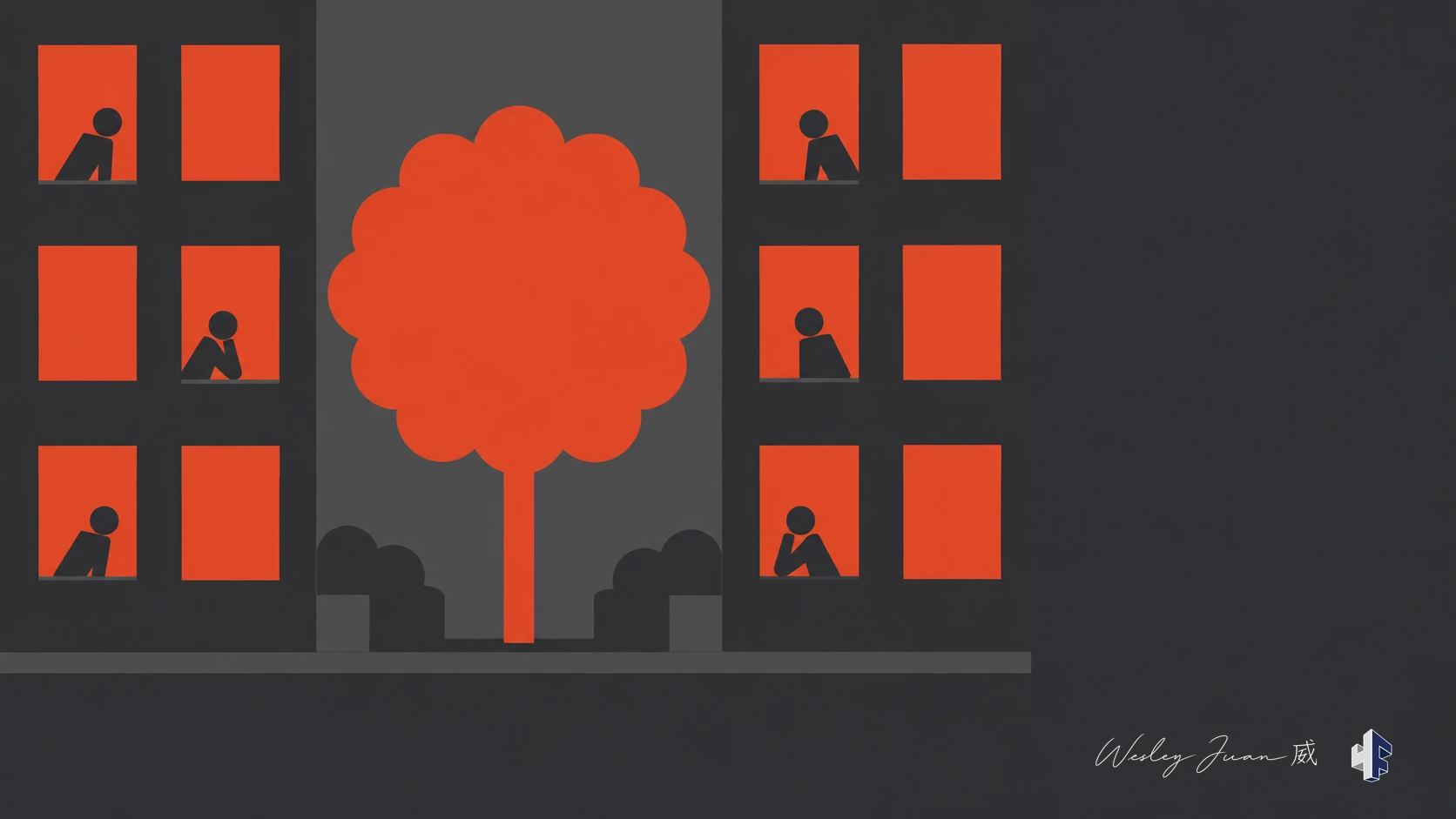
Say you run a restaurant. On weeknights the lights are all on and half the seats are empty. The rent still gets paid, the staff still get scheduled, and the ingredients in the kitchen won’t hold off going bad for a few extra days just because you’re in a bad mood.
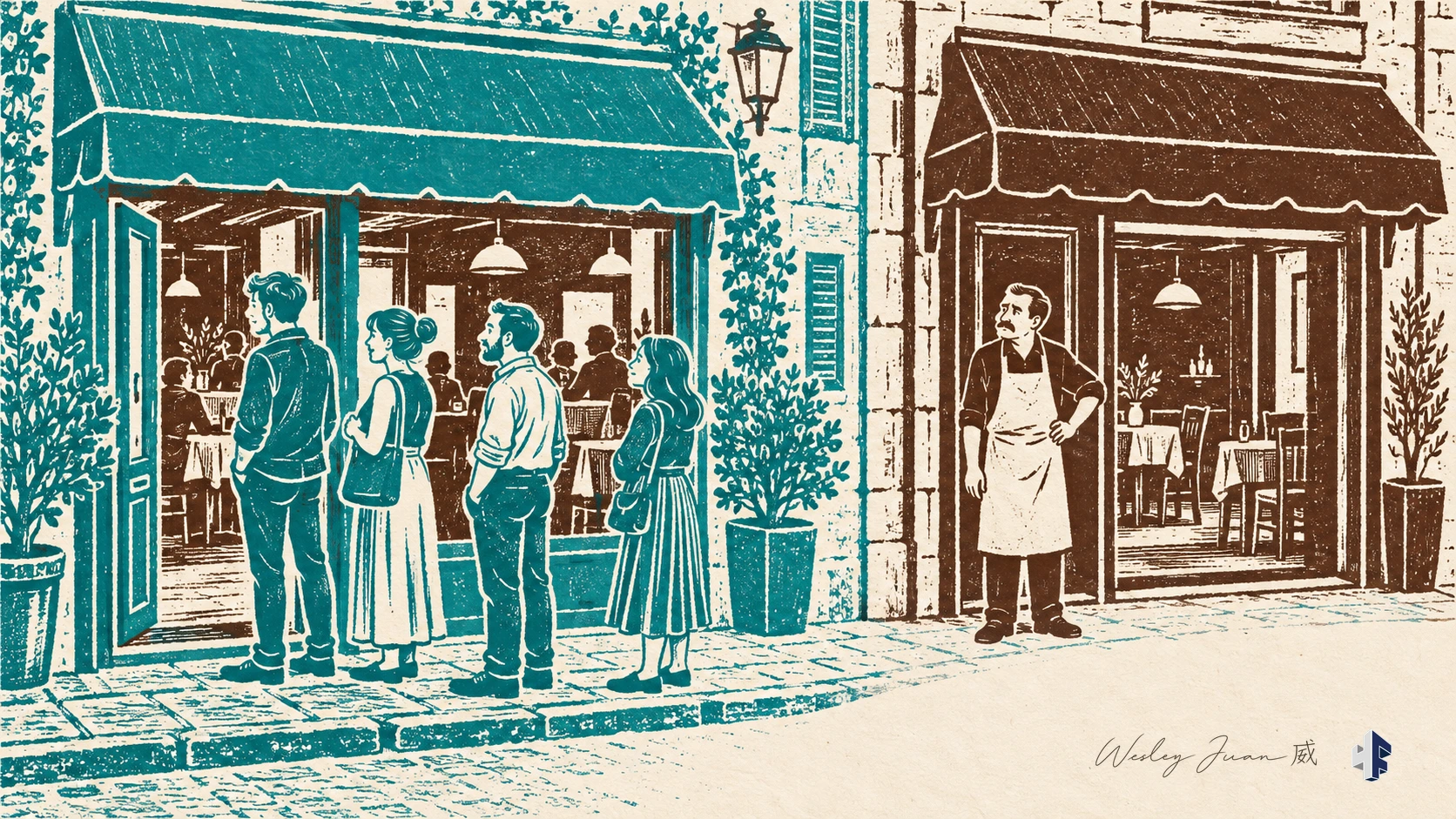
Week one, there really is a line
Someone gives you very direct advice: “Knock 20 percent off and get people in the door.”
It makes sense. Customers feel it’s cheaper and are more willing to try; seats that sat empty start bringing in money. You run the numbers on a few traffic levels, decide you can handle it, and give it a try for a while.
Week one, there really is a line.
If the story stopped here, it would make an easy “How I Saved My Restaurant With a Price Cut” post. But the owner next door is watching your line too.
Week two, other people’s choices join in
The place next door puts up the same deal. A few days later, another spot throws in a free drink.
You were comparing “my restaurant before the price cut” with “my restaurant after.” Customers are now comparing three restaurants that have all cut prices at once. The discount you’re paying for is still there. The difference that drew people in has shrunk.
No need to decide here which owner is smarter. Each has good reasons of their own: one wants more off-peak traffic, one wants to keep the regulars, one just wants to clear inventory for a while. They face different conditions, and they can afford different prices.
That’s the trouble. Once your strategy is out in the world, other people see it, understand it, and act on it. Those actions come right back to you as new conditions for your next judgment.
Twenty percent off is still the same number. It’s just sitting in a different game now.
Twenty percent off is still the same number. It’s just sitting in a different game now.
Success changes the conditions too
Let’s push the story further.
The deal runs for a few months and customers get used to the new price. When you try to go back to the old one, some people think you’ve raised prices. A tool you meant to use for a while starts shaping how people see your restaurant.
Or business really does stay good. Someone nearby sees there’s demand for this kind of food and decides to open a similar place. The opening you spotted, precisely because it was seen, has drawn in a new competitor.
Any of this could be rewritten. Swap in another set of conditions: your experience is hard to copy, customers don’t care about the 20 percent at all, and a competitor’s costs mean they can’t follow. We added the conditions in this story, and the conclusion has to follow the conditions.
One thing worth writing down: even a method that works at first will, through its own effects, change the setting it gets used in next time.
So “it worked last time” is important information. You still have to follow it up: when it worked last time, what did things around it look like?
We’re used to being handed problems. We’re not used to problems that talk back.
Think back to the exercises we all know: the teacher gives the conditions, we find the solution. An exam doesn’t swap in a different question because you solved it too fast. A math formula doesn’t stop working out of spite because everyone has learned it.
That kind of training is valuable. It teaches you to reason under clear conditions. But walk into business, collaboration or negotiation, and the conditions now include people who respond to you.
You change your quote, and the client changes what they want. You add a performance metric, and your coworkers reshuffle their time. You put out a statement, and people who weren’t paying attention start to, while the people already criticizing you switch to different questions.
You still need methods. They just need a slot for what other people will do next.
So “What do I get if I do this?” picks up another layer: “If I do this, who changes what they do? And once they’ve changed, does my original reasoning still hold?”
This is the dynamic thinking I want to bring into a sparring session. Put a choice into a scene first, then let the other people in the scene start moving.
Won’t thinking through everyone’s reaction keep you from ever doing anything?
Yes. If every time you have to play things out ten years ahead and work out every move of every person, you’ll collapse before dinner service even opens.
But we can shrink the scope. Back at the restaurant, pick the one reaction most likely to change your judgment: the place next door matching your cut. Then ask: if that really happens, what will I watch?
If the new traffic covers the discount and the food holds up, keep going. If customers are just buying the cheaper option at the times they already came, so you’re busier but keeping less money, redo the math. If it works off-peak but strains you at peak, adjust the hours.
All of this depends on real observation. You can’t sit at a desk and declare the restaurant’s win or loss in advance. Thinking it through gives your observing a direction, so that adjusting doesn’t shrink to “just hang in there a little longer.”
Dynamic thinking doesn’t mean changing your mind every day, either. Agreeing up front on how long you’ll watch, what cost you can take, and which changes call for early action actually makes you less likely to be yanked around by one good or bad day.
Send a method out with the conditions that made it work
Next time you hear “This method really works,” hold that excitement for a second and ask a few more things.
Who did it work for? What hadn’t anyone else done yet at the time? If everyone finds out and does the same, where’s the advantage then? And what change would make the person who came up with it stop?
These questions make a method more believable, because you finally know where it applies. They also expose the gaps in a pretty success story, because the person telling it remembers what they did and leaves out what the world did for them.
At Mental Gym, I want to put this kind of questioning on the table. You bring a move you’re about to make, and we let the customers, coworkers, rivals or partners each take a turn, and see what your original answer runs into.
Whether that restaurant cuts its prices in the end is still open; there’s more than one good choice. But at least the owner sees one more thing: the owner next door doesn’t live inside his spreadsheet, waiting for nothing to change.
He’s working out a plan of his own.
Business picks up after your price cut, and the place next door cuts its prices too. What changes would you watch to decide whether to keep going?
Your notes and saves (optional)
Keep a version of your own.
Saved only in this device’s browser and never sent anywhere. Other devices won’t see it, and clearing your browsing data erases it.