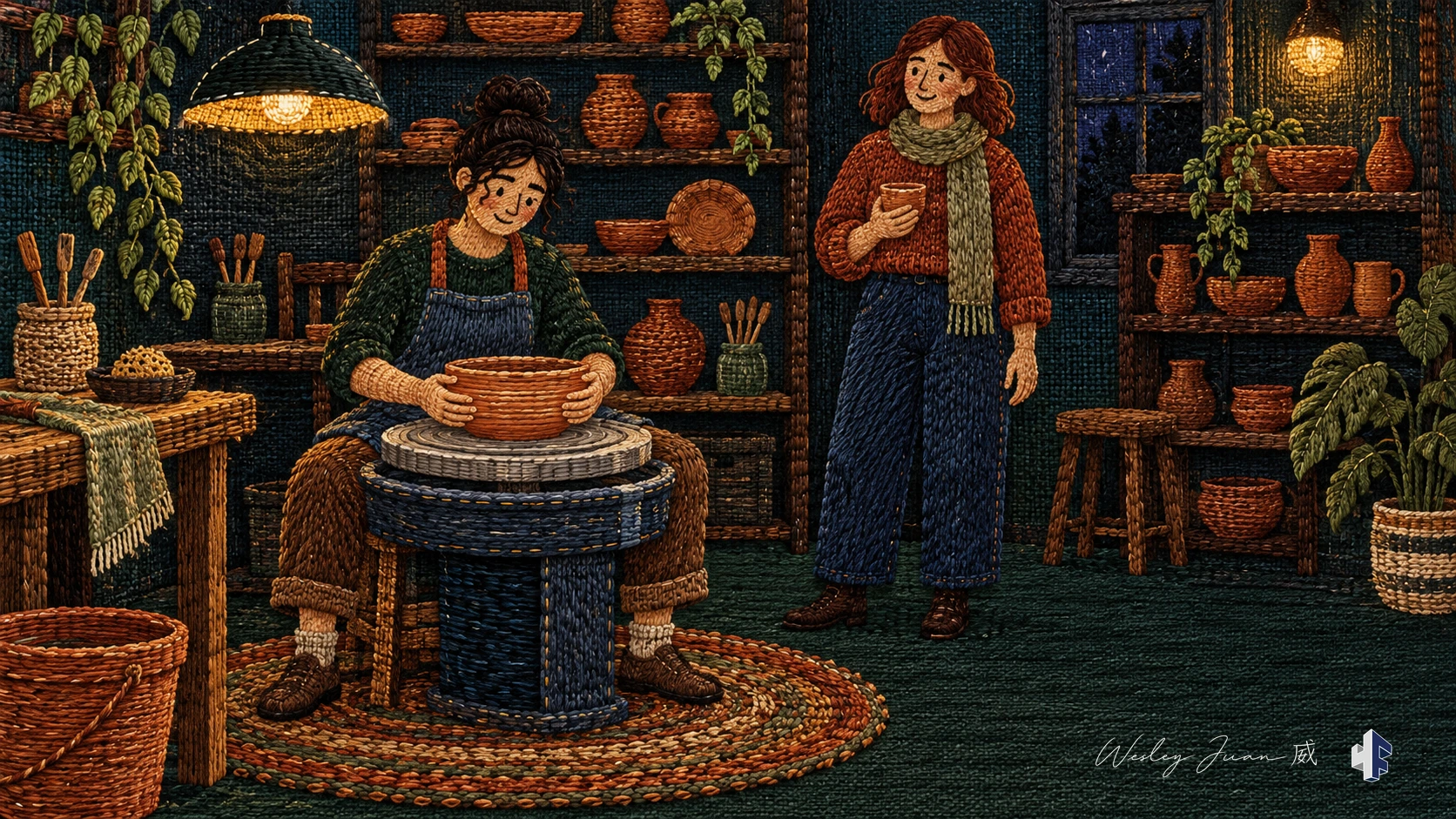
Picture someone who loves making pottery. They’ve thought about opening a studio: people dropping by in the afternoon to pick out cups, a few classes on weekends. Then they actually list out rent, equipment, and opening hours, and find that the photo of the ideal life has another calendar printed on the back.
One dream often has several wishes living inside it
“I want to open a pottery studio” holds a lot of longings at once: to keep making things, to share them with people, to set your own hours, or to make a living from what you love.
They can hold each other up, and they can pull against each other. More custom orders bring in money but eat the afternoons you’d spend on your own work. Teaching classes brings more people to clay, and it also means prep, cleanup, and explaining the same thing over and over.
Figure out which part you’d hate most to lose, and you’ll know whether the plan in front of you is moving toward the dream or just keeping up its appearance.
Change the vessel, keep the core
If what matters most is to keep making work, then renting time in a shared studio, setting a fixed weekly making day, or putting on a small show with friends are all versions worth exploring. If teaching is what you care about most, you need to actually take someone through a piece start to finish, not just imagine students gathered around the table.
None of these automatically replaces opening a shop. Someone who wants a whole space of their own will still feel they’re missing an important kind of independence. You lay the versions out to see the differences clearly, not to talk yourself out of the big plan with a cheaper small one.
You can also start testing with the part you’re least sure about. If you know you love making pottery but not whether you’d love teaching, set up one clearly scoped session, then see whether you’d be willing to repeat the less romantic parts of it.
Find the part of the dream you most want to keep, then decide what shape it needs to grow into.
Some dreams need all their conditions to exist
Not every goal can be shrunk indefinitely. Some crafts need continuous training, some work needs an unbroken stretch of time, and once you remove a key condition, what you end up making isn’t what you set out to make.
So sort it out: what can be swapped, and what can’t be skipped? If a piece needs specific equipment to be finished, treat the equipment as a practical requirement instead of blaming yourself for not being passionate enough. If you can’t afford it right now, you can shelve that version of the plan and write down what it would take to restart it.
Shelving it isn’t a secret vow to finish it someday no matter what. In a few years the conditions may be in place, or you may love something new by then. An old wish can be taken seriously without becoming the creditor of every choice you make after.
The cups are still here
Three months on, some arrangements are more tiring than you imagined, and some afternoons you don’t want to end. Making pots, teaching, minding the shop: they were all written into one sentence of a dream, and only by living them do you learn how each one tastes.
That dream studio may get its own sign on the door one day. Or what stays, in the end, may be a row of cups at home that aren’t for sale.
Every morning, you still pick one to use.
If you can’t open your own studio for now, which part of that dream would you least want to put off?
Your notes and saves (optional)
Keep a version of your own.
Saved only in this device’s browser and never sent anywhere. Other devices won’t see it, and clearing your browsing data erases it.