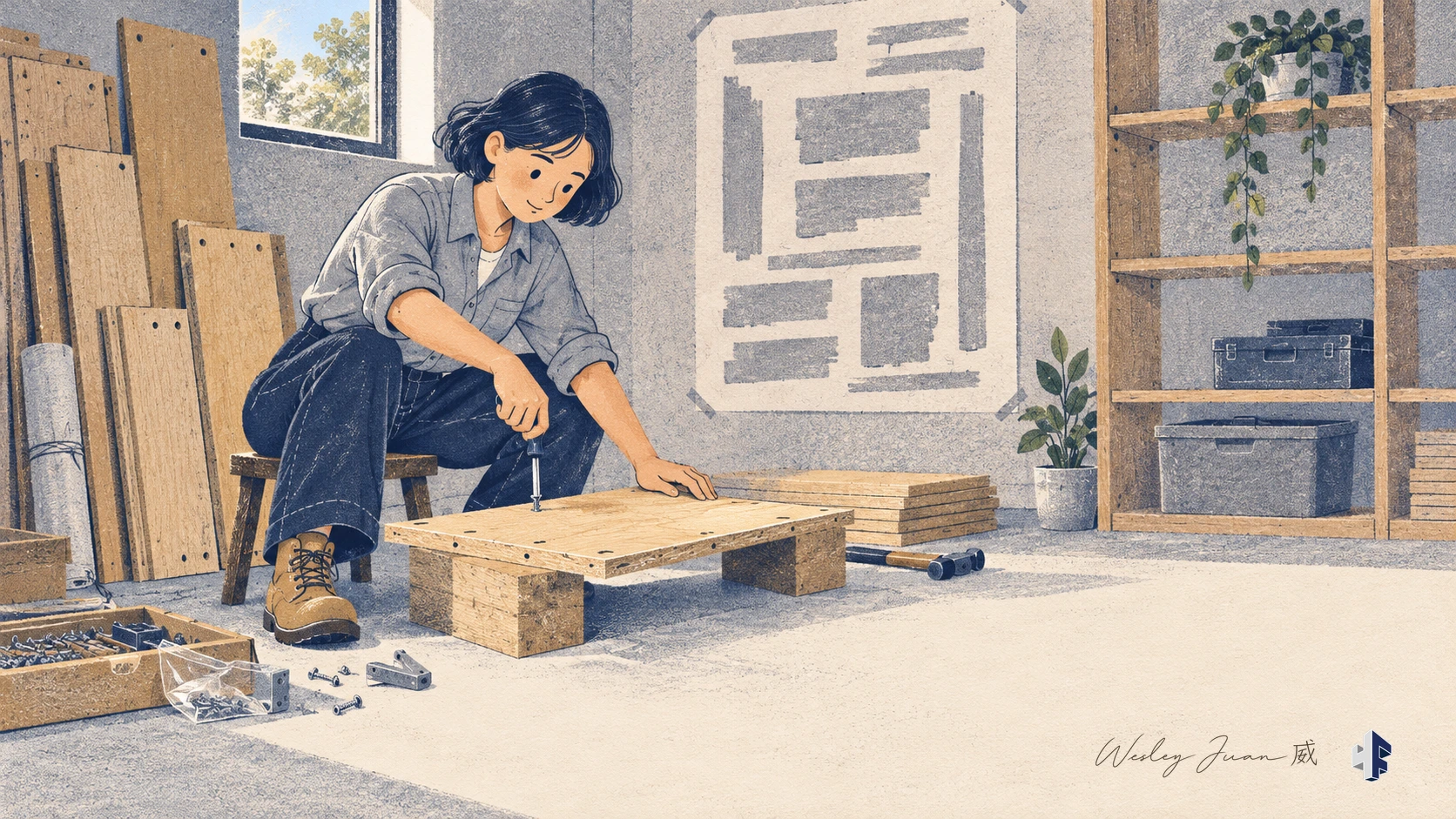
Break a big job into steps and take them one at a time. Sounds sensible. But what if the steps already fill a page and you still haven’t started?
Find the step you’re stuck on
Say you want to shoot your first video. “Write script, record, edit, upload”: every step has a name, and the first one still won’t budge.
Ask one more question: what, specifically, don’t you know right now? Maybe it’s the topic. Maybe it’s how to say the first line, or who this video is even for. Each kind of stuck needs a different next step.
“I don’t know how” can also mean “I’m not ready for what comes after.” You know how to hit record; you’re worried about people hearing your voice. Ten more how-to steps probably won’t help. Recording one clip just for yourself gets closer to where you’re really stuck.
Record a clip. Who’s it for?
If you’re stuck on the topic, list three questions people asked you this week. If you’re stuck on the opening, record a voice memo answering a friend.
“Finish the script” still hides a lot of judgment calls. “Talk into your phone for three minutes, answering one question” makes it much easier to tell whether you’re done. This step doesn’t have to become a finished piece. It can just be material for the next one.
You can attach a check to the step, too. After those three minutes, don’t rush to decide whether it sounded good. Just find one line you genuinely want to keep talking about. With that line, next time you’ll know where to start. If you can’t find one, that’s a signal too: maybe the topic needs to change, or you need one more example of your own.
Once this step is done, which uncertainty will be gone?
Small, but pointed where you want to go
Tidying your tools, researching microphones, renaming folders: each can be small and easy to finish. But if what you’re missing is something to say, finishing them can still leave you right where you started.
When you pick your next move, ask: once this is done, which uncertainty goes away? If you can’t answer, it’s worth picking again.
Sure, sometimes tools really do block the start. If your phone’s storage is full, you have to clear space; if the room is too loud, you need another room. Don’t write off all preparation as an excuse just because “sorting your tools might be avoidance.” Come back to the concrete question: is this step removing the obstacle that’s actually in front of you?

Let the first step change the whole plan
That three-minute voice memo might show you that what you really want to talk about is something else. Rewriting the plan then is progress, too.
Try a short take first, and you get to hear your own voice saying it. The topic on your list may, a few sentences in, no longer be the thing you most want to say.
You can also decide in advance where to stop and look. After two clips, one interview or the first sketch, check the direction. That way, even if you set off the wrong way, you won’t find out only after finishing the whole list. A to-do list can grow along with your understanding.
For your first video, you’ve researched gear and organized your files, but you haven’t recorded a single take. Which step would best show you what you actually want to say?
Your notes and saves (optional)
Keep a version of your own.
Saved only in this device’s browser and never sent anywhere. Other devices won’t see it, and clearing your browsing data erases it.