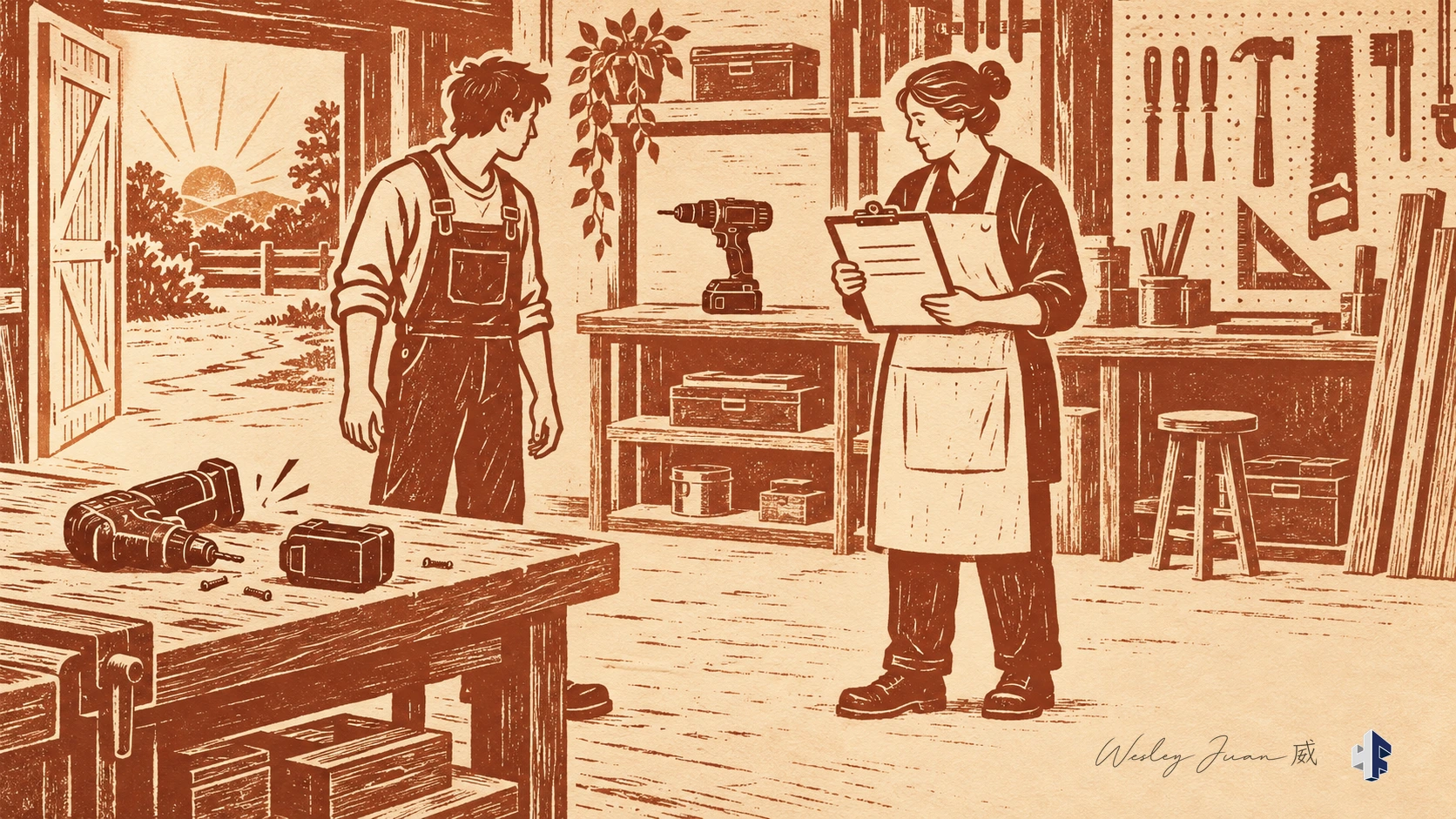
Picture a small exhibition in the works. The team’s designer turns out a gorgeous poster, the kind everyone wants to share on sight. It goes out, and the first question comes in: “Where do I sign up?” The group chat goes quiet for a beat. The sign-up form isn’t ready.
Done, but on whose desk?
The poster really is good. It gives the event a face and makes people stop and look. But next, readers need a date, a place, and a way to sign up; the organizers need to manage spots, confirm payments, and answer questions.
On this imaginary team, design delivers the image, promotion posts it, and the front-of-house person waits to organize the sign-up list. Everyone can point to the part they’ve finished, yet the event as a whole isn’t ready to catch its first guest.
If all you do now is ask everyone to be more responsible, it’ll happen again next time. Nobody ever agreed whether “done” means your own deliverable is finished, or that the next person can start working. The first is easier to count. The second decides whether everyone’s effort actually connects.
The most capable person makes the gap disappear, for now
There’s a quick teammate in the group. She sees the problem, builds a form on the spot, writes the confirmation email, and formats the list so front-of-house can read it. Sign-ups open that night without a hitch, everyone thanks her, and the matter seems settled.
But when work gets divided up the next time, design still only does images, promotion still only posts, and the form and the handoff still have no official owner. The two evenings she spent patching the hole last time don’t show up on the schedule either.
Judged only by results, the team even learns the wrong lesson: this way of scheduling works. The smoother the rescue, the less likely the gap is to make it into the next plan. Her competence becomes a shared resource nobody has to book or pay for.
Do your part well, and ask one more thing: what does the next person need to keep going?
If everyone knows it’s a problem, why doesn’t it change?
Not everyone is deliberately taking advantage. Formally handing off the form means someone has to do less of something else; adding a handoff means everyone has to free up time on the calendar; and if this round went fine, all those costs look like extras.
There’s subtler resistance, too: finished work is easy to see, but a well-mended seam means nothing happens. The person who made the poster can show it off; the person who catches, ahead of time, that the confirmation email is missing the address leaves behind only a mess that never happened. If a team only says thanks while putting out fires, everyday prevention struggles to earn a place.
So “everyone be more careful next time” isn’t enough. What exactly did she do on those two evenings? Who does it next time? That’s what gets you to the real questions: who checks the sign-up flow, who has the authority to hold a post, at what point a handoff counts as done, and where the time for all this comes from. Add responsibilities without dropping a single other commitment, and you’ve only swapped improvised overtime for official overtime.
Put the handoff where someone’s actually there to take it
For the next event, fix one seam first. Before anything goes out, promotion and front-of-house walk through it on their phones: open the poster, get to the form, submit a test entry, receive the reply. Only once front-of-house confirms they can read the list does promotion schedule the post. And the test entry gets deleted so it doesn’t mix with real sign-ups.
This doesn’t take a long all-hands meeting. It takes clear acceptance criteria, and someone who can genuinely say “not ready yet” when they aren’t met. If the launch date can never move, the person handling the handoff will just quietly fill in the gaps, and the check becomes one more nudge to hurry.
When something comes up at the last minute, someone will still have to step in. Agree in advance on what they can handle on their own, and afterward log the time they actually spent back into the schedule. Catching the event today and fixing the division of labor tomorrow can both happen; the records are what prove the process is broken.
After the fix, how do you know it actually changed?
If nothing goes wrong next time, hold off on giving the new process all the credit. Maybe the event was smaller, or that teammate is still patching holes where nobody can see. Ask one more question: who did work this time that wasn’t on the plan? If it still lands on the same person, then however complete the handoff sheet looks, only the surface has changed.
Don’t lock every detail down so tight it can’t flex, either. A small copy edit and a sudden doubling of attendees call for different circles of notice. A good agreement lets people know what they can decide on their own and what changes someone else’s work. It doesn’t add a sign-off form to every little move.
That beautiful poster still deserves the praise. But next time, besides asking who made it, someone also asks: once it brings people in, how are we ready to receive them? And the teammate who’s best at saving the day finally gets to keep one evening for the thing she promised herself.
Every event gets rescued at the last minute by the same person, and every one ends up going fine. What would make the team willing to change how the work is divided before the next thing goes wrong?
Your notes and saves (optional)
Keep a version of your own.
Saved only in this device’s browser and never sent anywhere. Other devices won’t see it, and clearing your browsing data erases it.