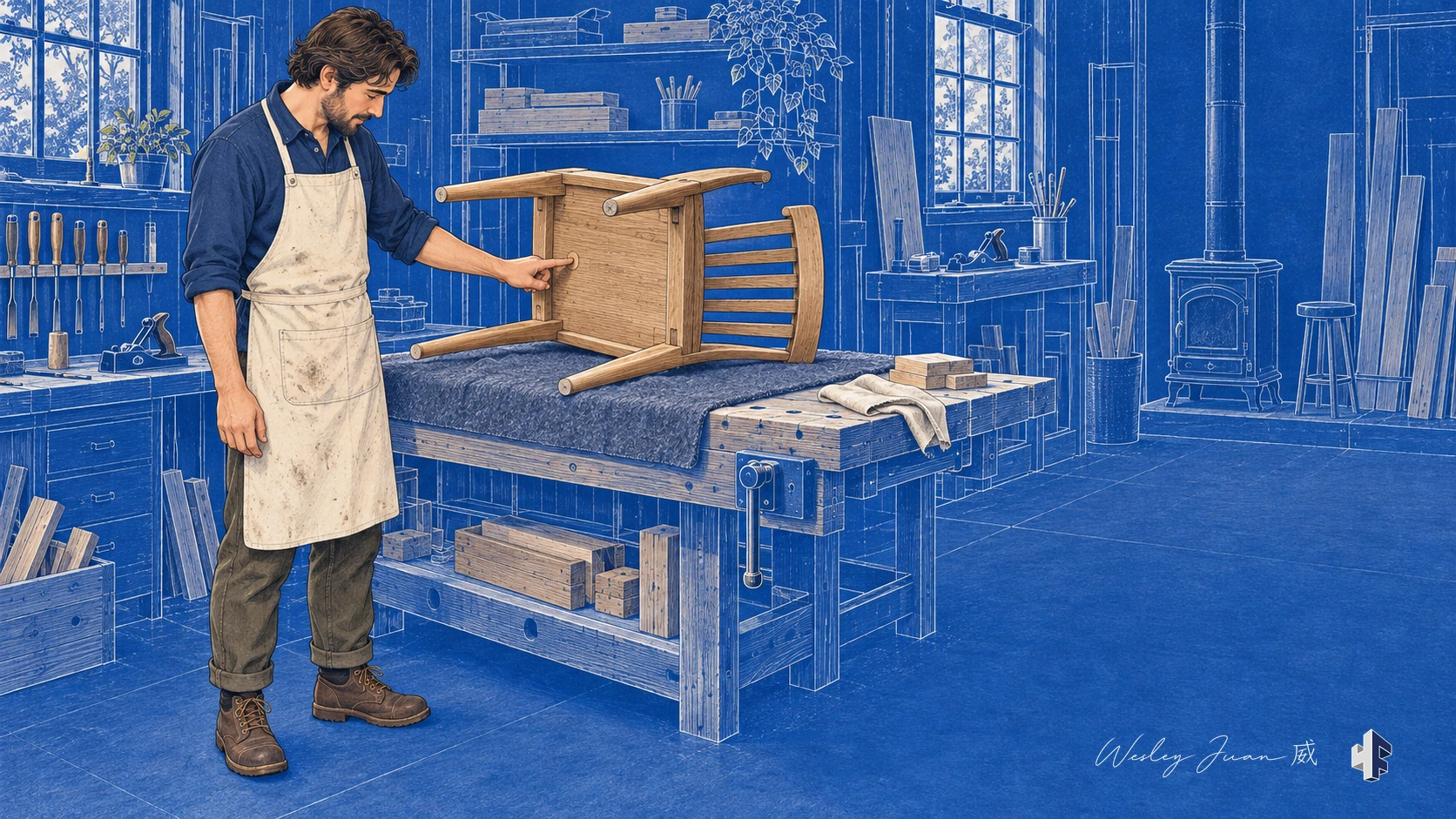
Under a chair there’s a tiny mark. Whoever sits in it won’t see it, and whoever moves it rarely turns it over. The person who made the chair knows it’s there. That may be all they need.
Past the deliverable, a little of you
When you work for someone else, you have to understand the purpose, the budget, the schedule, the style. Sometimes there are plenty of choices. Sometimes there’s only a sliver of room to adjust.
In that sliver, you might give a paragraph room to breathe, let a cut between two shots land half a beat late, or finish a corner nobody usually notices so it sits a little easier in the hand. In a portfolio, those choices are usually a line of small print. They keep you present in the work.
Being seen is worth something
Of course work needs an audience. Getting the point across, being liked, hearing back: those are real and they matter. There’s no need to call wanting a response impure.
But if every choice has to be approved from outside first, you may slowly lose the chance to work out what you like. A detail nobody has understood yet keeps its value all the same. And however much you love it, whether it works still depends on where it’s used.
You can keep both: listen to how the work gets used, and hold on to a few preferences only you can answer for.
Some choices mean something because you’d still make them again.
The little room has walls, too
Say you’re building a website for a client, and somewhere it won’t get in anyone’s way you tuck in a rhythm you love, or tidy the code into a cleaner structure. As long as it fits the agreement, that care can stay quiet.
If the detail slows the page down, changes the message, or eats time the client never agreed to, you need to talk to them. Your private taste is now part of someone else’s experience.
Learning which choices keep coming back
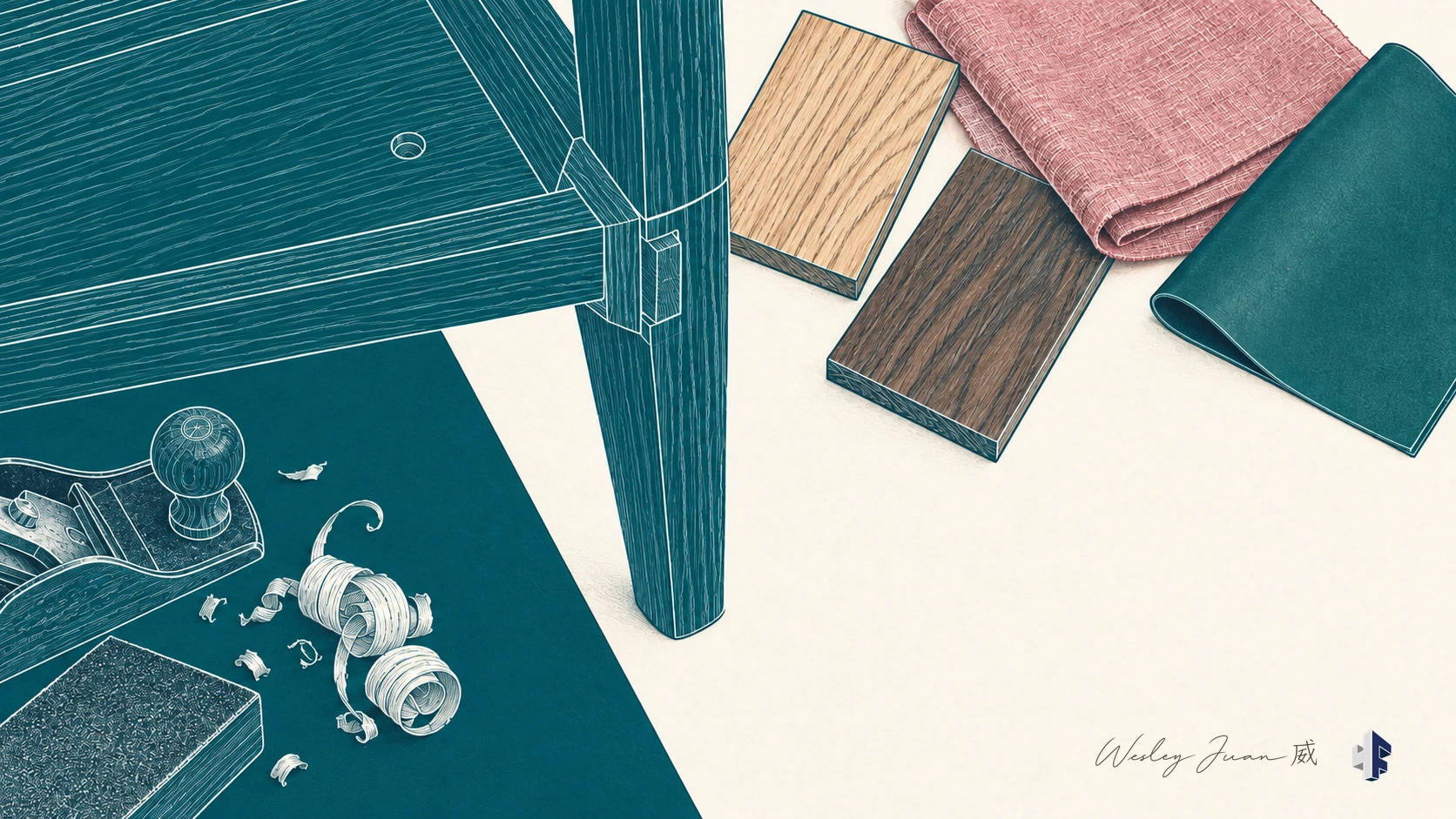
Look back over a few pieces and you may notice some preferences turning up again and again. A voice in no hurry to finish its sentence. The feel of a certain material. A kind of problem you can never quite bring yourself to skip.
At first they don’t have the name “style.” They’re just what you chose to keep, time after time.
Look again after a while: some you no longer like, and some are still there. Not everything in that little room is something you can explain.
Nobody noticed the mark under the chair, but you can’t bring yourself to leave it off. What is that detail keeping for you?
Your notes and saves (optional)
Keep a version of your own.
Saved only in this device’s browser and never sent anywhere. Other devices won’t see it, and clearing your browsing data erases it.