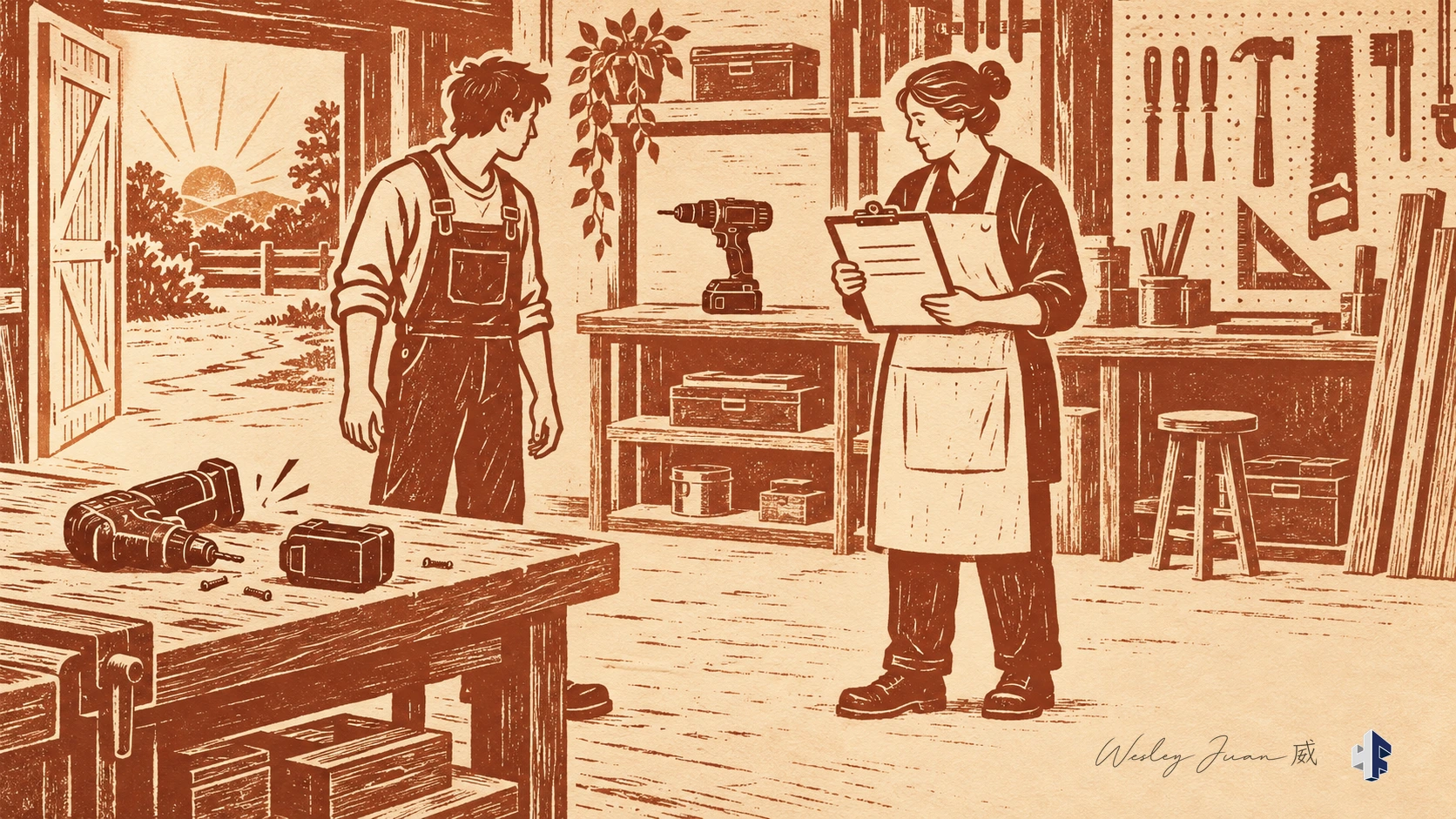
You love bookstores. Afternoon light on the spines, a clerk helping someone track down a book whose title they can’t remember. One day you spot a help-wanted sign, and the picture forms fast: if you could be here every day, work would come close to the life you love.
Which side of the counter is the part you love?
Nobody should pour cold water on that longing. Interest in a field is a real reason to commit to it. But a reader’s hour in a bookstore and a clerk’s full day working there hold different things.
Picture a small bookshop. Customers see the curation and the displays. The staff also handle deliveries, inventory, returns, cleaning, and that one book nobody can find no matter where they look. Someone who loves quiet reading gets worn out being asked questions all day; someone who loves talking books with people enjoys exactly those interruptions.
One industry name holds very different days. When you ask yourself what you want to be close to, it helps to also say which side you want to stand on.
Trade the daydream for an ordinary Tuesday
Instead of only asking whether the job has passion in it, ask someone to walk you through an ordinary workday. What time do you get in? What’s the first thing you do? Which three tasks eat the most time? At the end of the day, how do you usually judge whether it went well?
If you want to explain products and discover the main task is closing sales quickly, there’s more to talk about: is careful explanation expected at all? How is time split when it’s busy? How much room does the part you care about actually get in this role?
Details like these help you picture it better than “we really value service.” And don’t only interview the most enthusiastic person there; colleagues on other shifts and in other roles will show you another, equally real version of the job.
Before you choose a job, see whether you’d want to live its ordinary day.
Passion and operations can sit down and negotiate
A shop needs revenue and staff want to do good work; the two aren’t natural enemies. A thorough explanation helps one customer buy the right thing, and it also adds to the wait for everyone else in line. The sticking point is usually how time gets divided, more than who has the purer heart.
You might, for instance, move in-depth consultations into booked time slots, so people who want to talk get proper time and drop-in shoppers can still check out smoothly. Whether that works depends on the shop’s size, staffing, and customers; no single arrangement fits every floor.
But if a job keeps asking you to do things you can’t stand behind, understanding the business doesn’t mean you have to accept it. Once you see their constraints, you can still keep your own limits.

What you love can also wait until after work
Once you know the daily routine, you may want in even more, or realize you’re better suited to being the regular customer. Either way, the choice gets concrete.
Some people gladly take on the tedious work because it keeps them close to the books and the people who love them. Others want a passion to keep its own rhythm, without also carrying income, performance reviews, and deadlines. No need to rank who loves it more. You can love something from more than one distance.
Next time a pretty picture of an industry pulls you in, go meet an ordinary Tuesday first. The half-day you’re looking forward to, and also the hour when boxes are stacked at the door and the floor is waiting to be mopped. Would you love that side too?
What’s the difference between loving to browse a shop and opening it, counting stock, and closing it every day? Which part of those days draws you most?
Your notes and saves (optional)
Keep a version of your own.
Saved only in this device’s browser and never sent anywhere. Other devices won’t see it, and clearing your browsing data erases it.